Stormy weather, and it was nice to be cozy indoors this morning. We talked about a St. Paul Island seabird research project that is finding out where black-legged kittiwakes and thick-billed murres spend their winter. Since 2023, this study has tagged 33 kittiwakes and 27 murres with geolocators.
We spent a while looking at the tiny geolocators and seeing how these loggers are fitted to a bird-band using small zip ties. After looking at a map showing the winter distribution of tagged birds, Jillian was surprised to notice that the birds didn’t visit the Commander Islands. We had a fun competition to guess where tagged kittiwakes spent Christmas Day in 2023. It’s incredible that the data from these tags can actually give us that information!
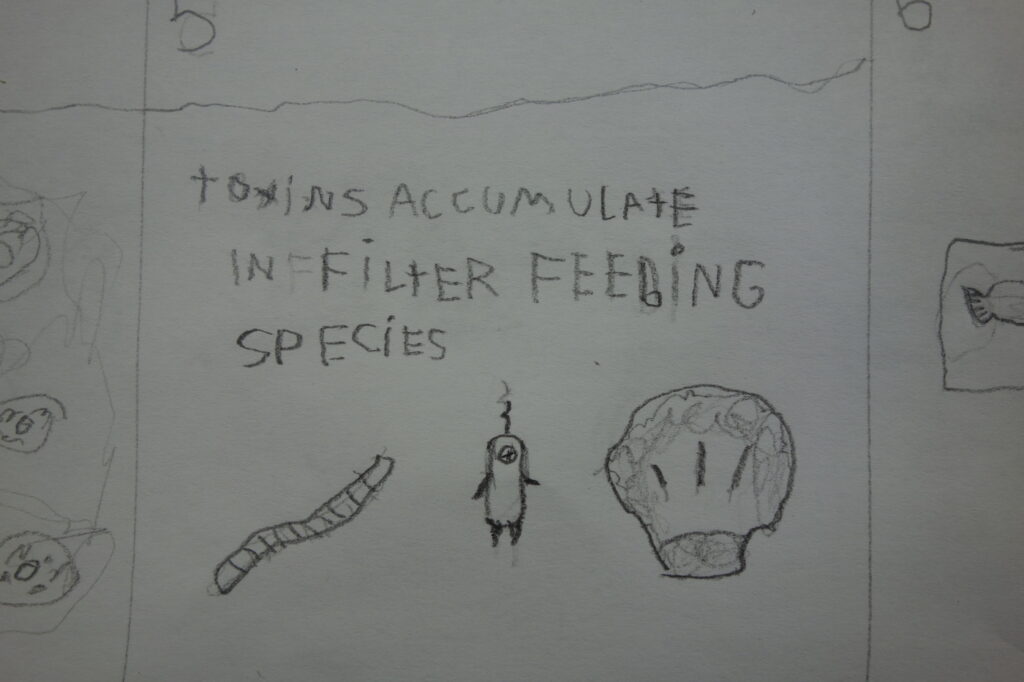
We then discussed Harmful Algae Blooms (HABs) and how certain algae species can grow out of control and produce a neurotoxin called saxitoxin that affects the cell function of whatever consumes it. Jillian and Chipper each created a story board to show how warmer water caused by climate change creates a great environment for these algae to grow, and how saxitoxins are transferred up the food chain and can cause animals to die if enough are accumulated.
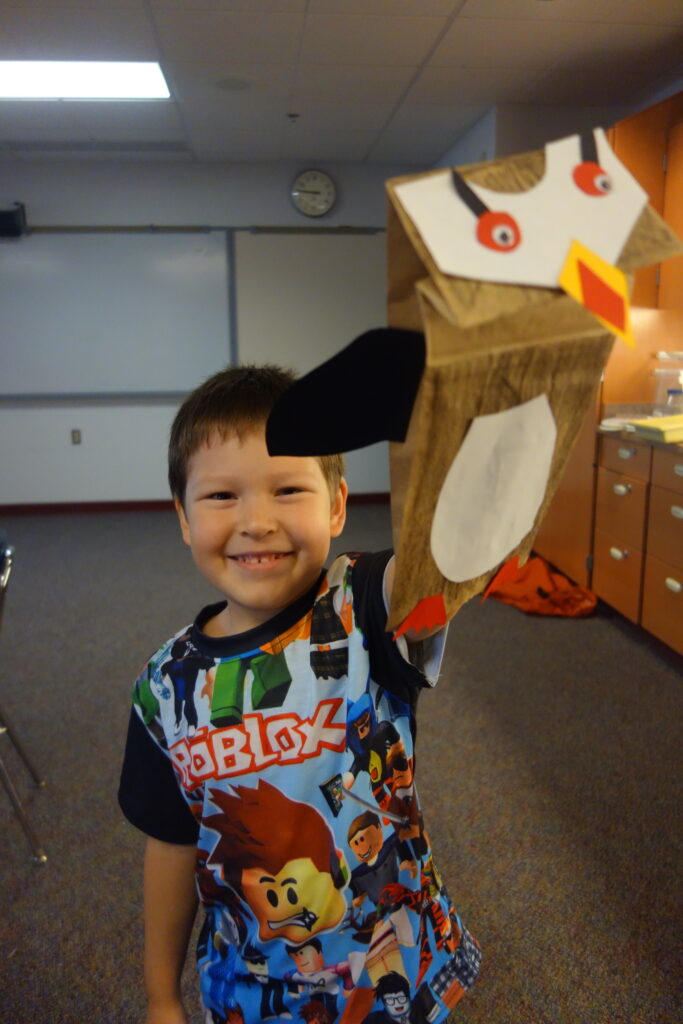
On a lighter level, Costin learned about puffins and made a horned puffin puppet (also called Costin!).
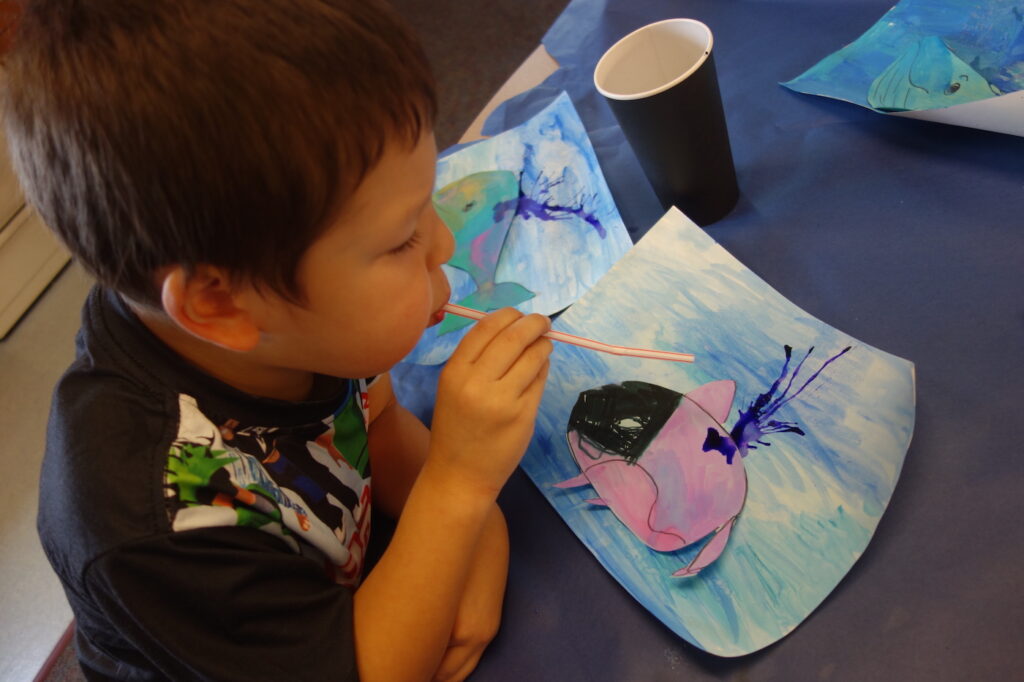
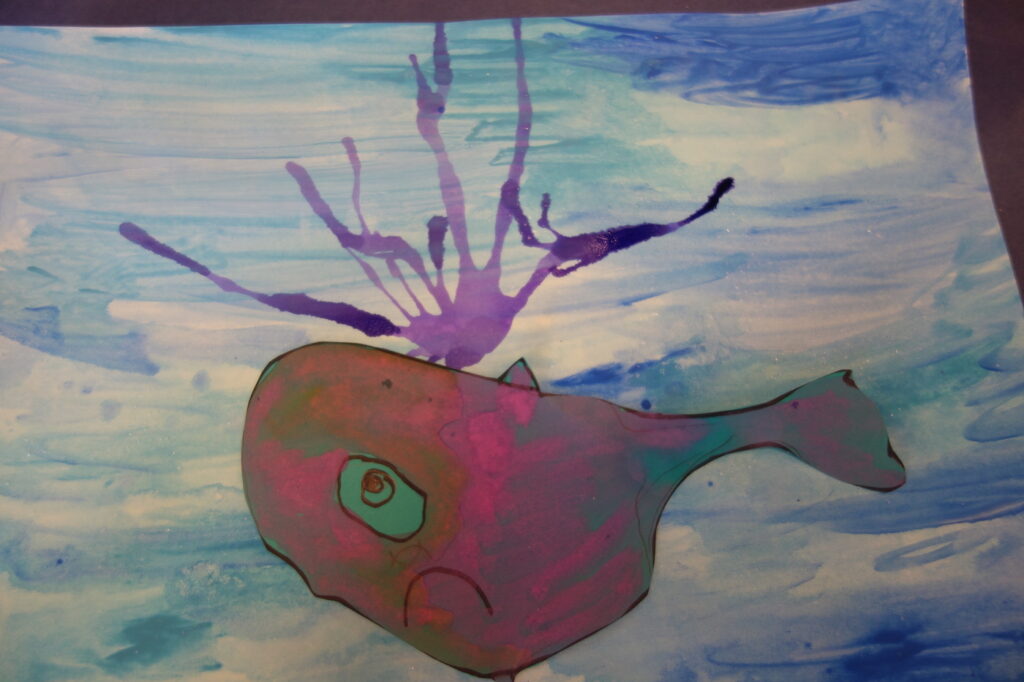
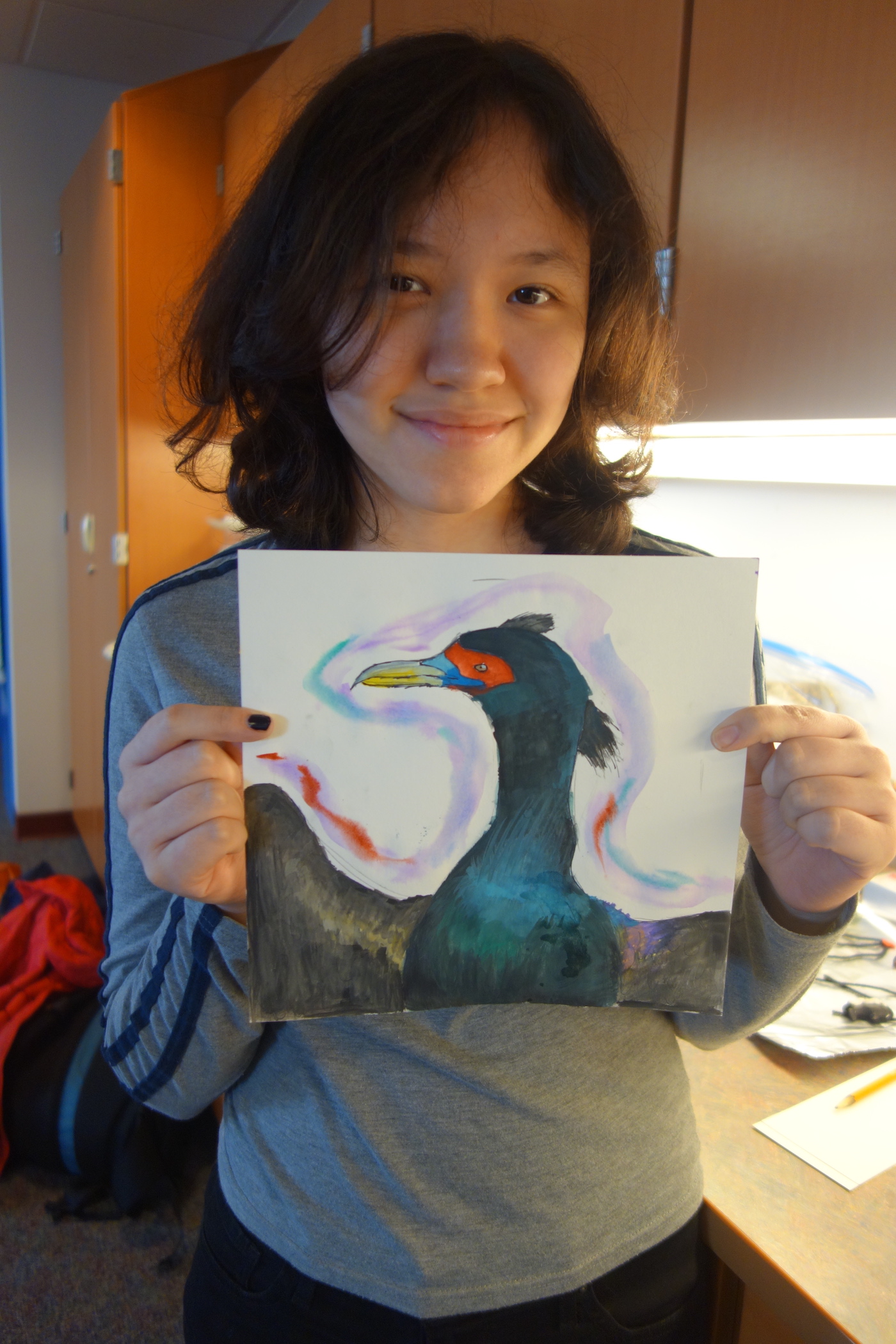
After lunch we braved the weather and went out to look at the big waves. We continued our art work for the Seabird Report Card, started to paint our leaf prints, and Costin learned how whales force air out of their blow holes to breathe. We had fun using a straw to create blown air on some whale art. It was a creative afternoon.