Walruses, auklets, and brittle stars, oh my!
Walruses are part of that special group of animals that are so ugly they are cute. In more scientific terms, walrus are part of the pinniped [...]

Walruses are part of that special group of animals that are so ugly they are cute. In more scientific terms, walrus are part of the pinniped [...]
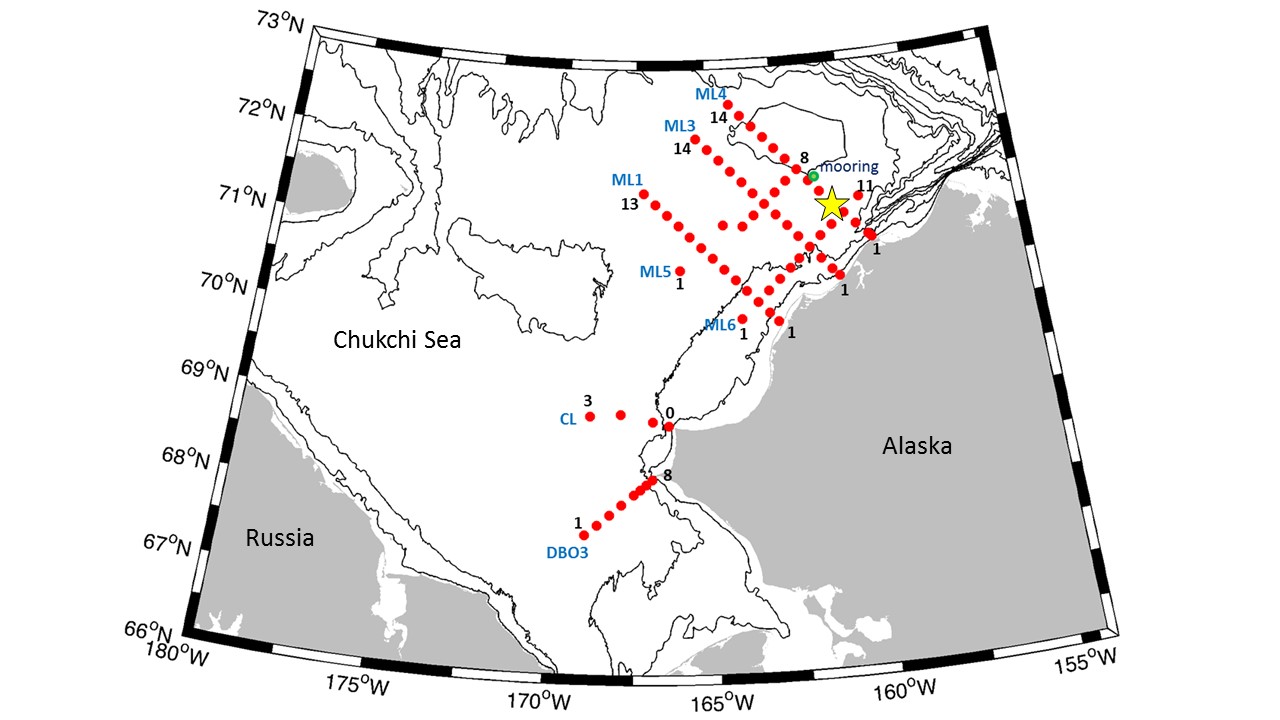
While the seabird and marine mammal observers sleep at night, other scientists are afoot. At every sample station (red dots on the map), they are on deck [...]
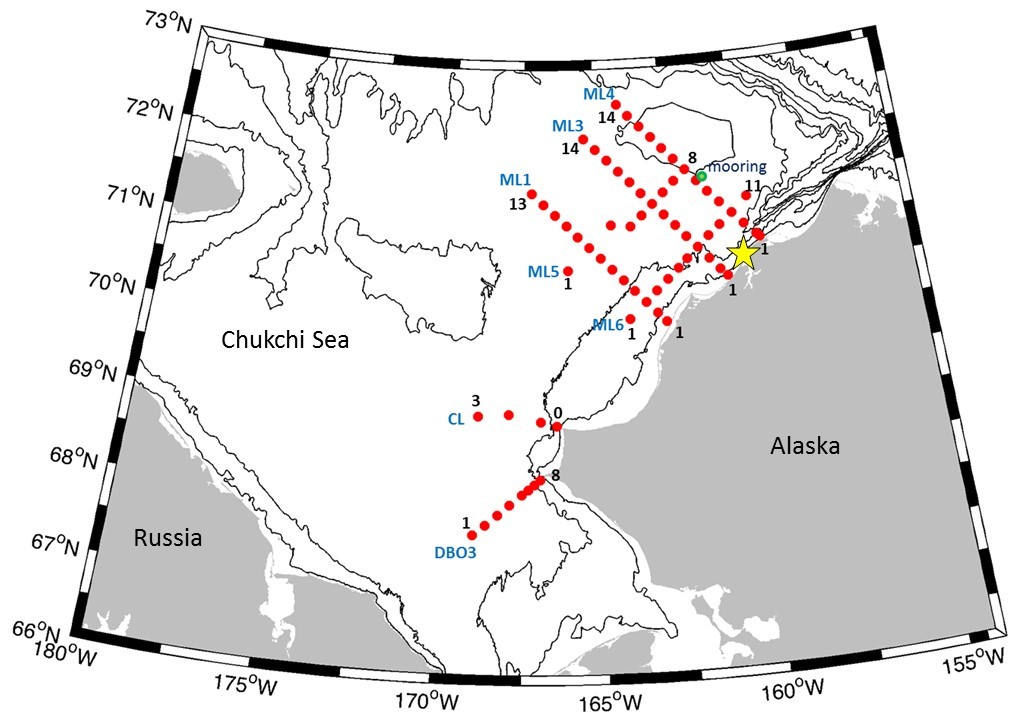
When you are living and working on a boat, two things stand out—you are stuck on the boat, and that boats can move in multiple directions at [...]
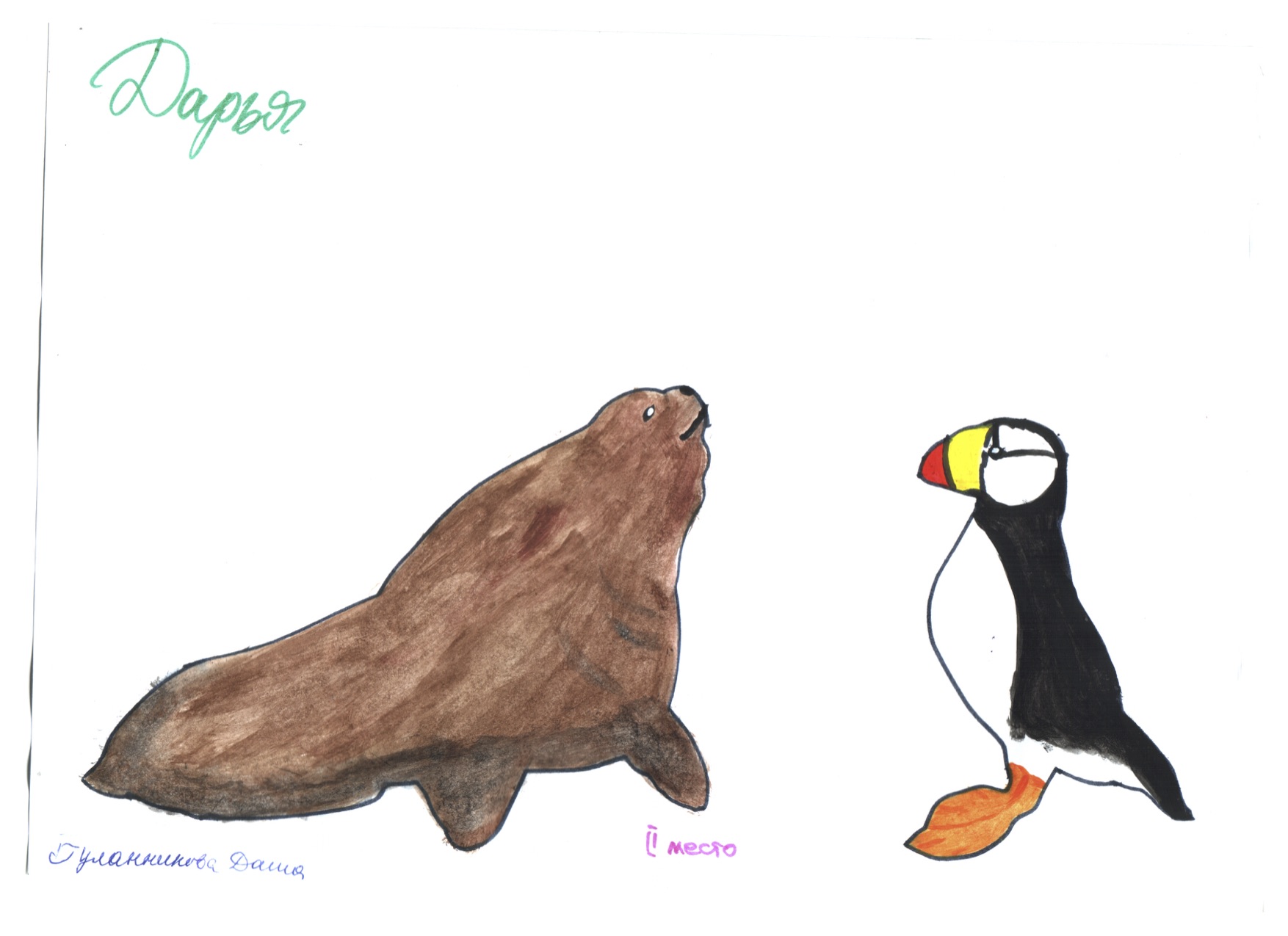
The kids attending the Commander Island summer camp have just sent some wildlife portraits they've been working on. Horned puffins, fur seals, and a raven. Thank you, [...]
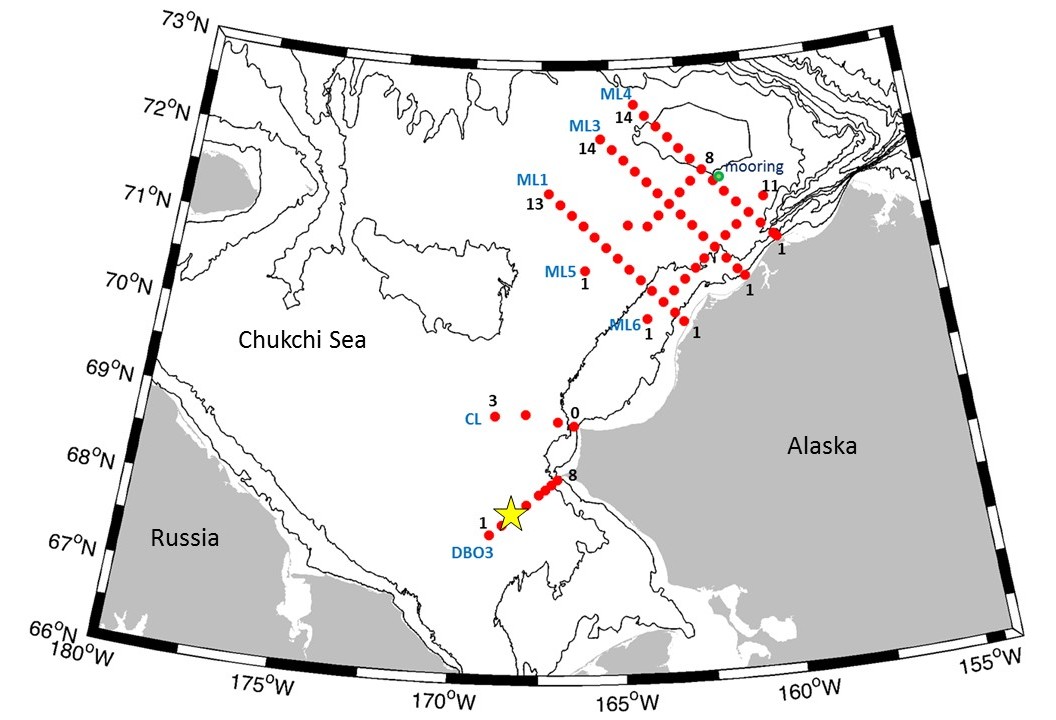
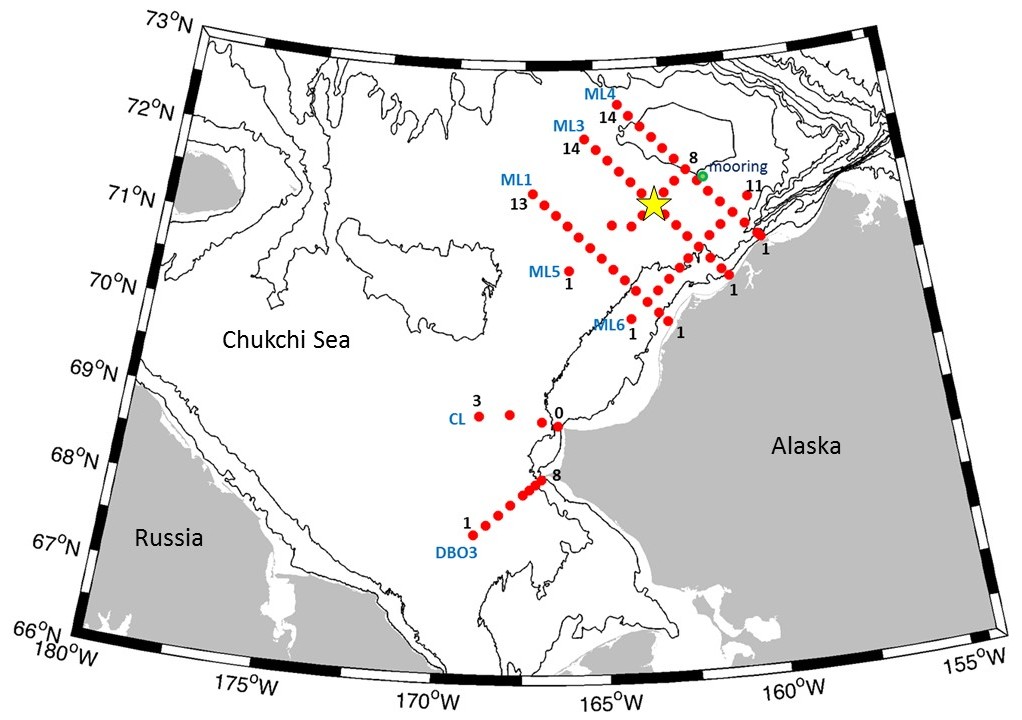
We have been transiting from Prudhoe Bay to our first sample station for the past several days (yellow star in location map above shows current location), and were [...]
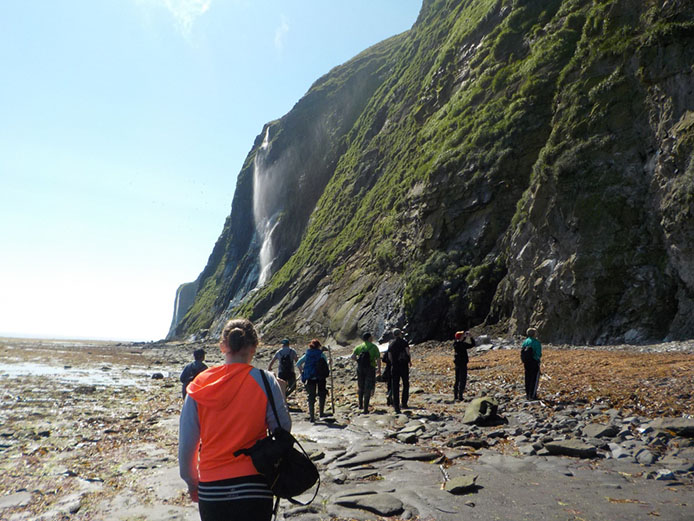
The kids on the Commander Islands have just returned from their summer camp. We're really excited to hear about the camp activities, it sounds like it was [...]
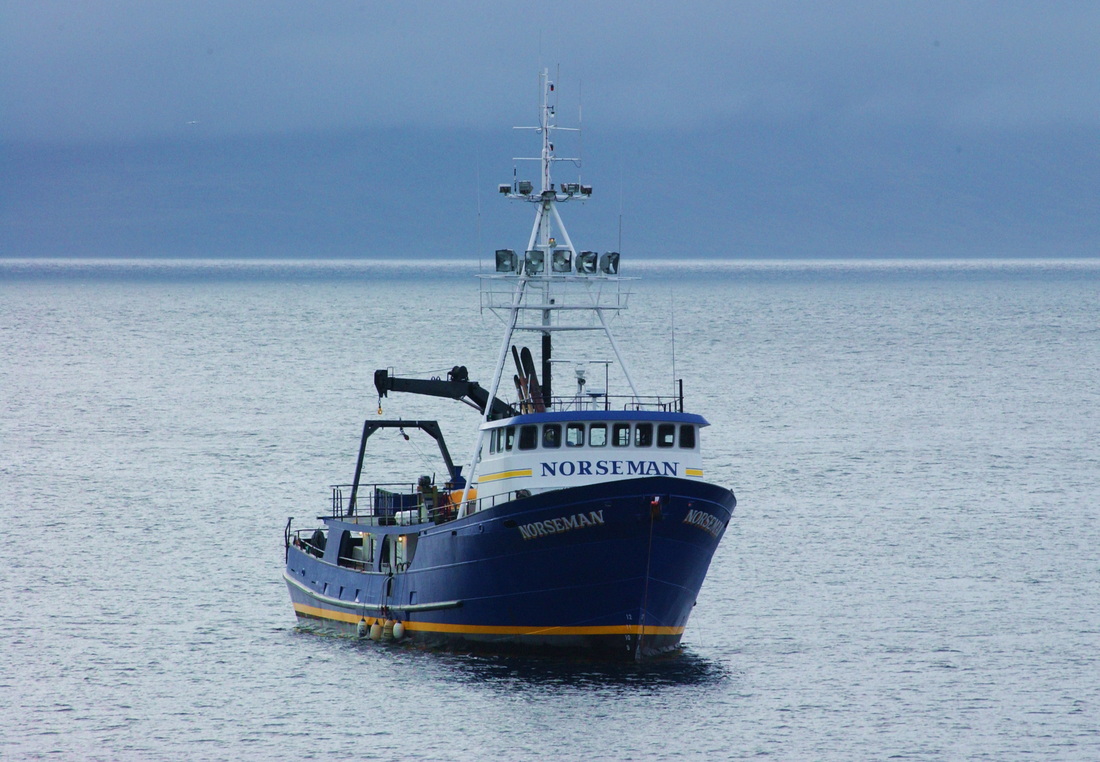
What is the Arctic Marine Biodiversity Observing Network (AMBON) project? The AMBON project is one of three pilot projects whose goal is to help establish a national [...]
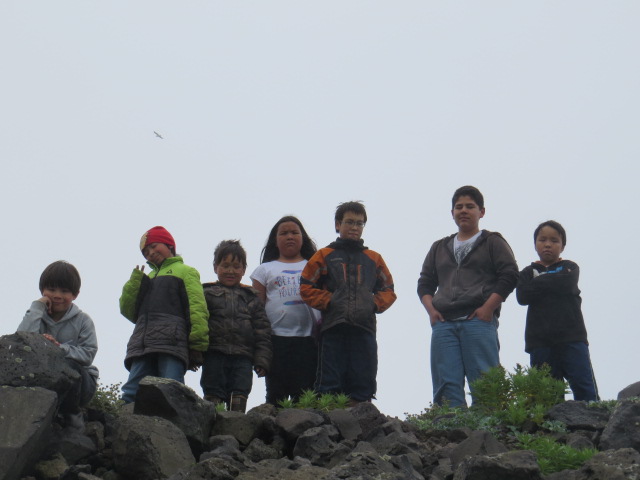
Seabird activities continue on St. George. Abram gave a talk about the red-legged kittiwake project, that included using Google Earth to check out the small hand-full of [...]
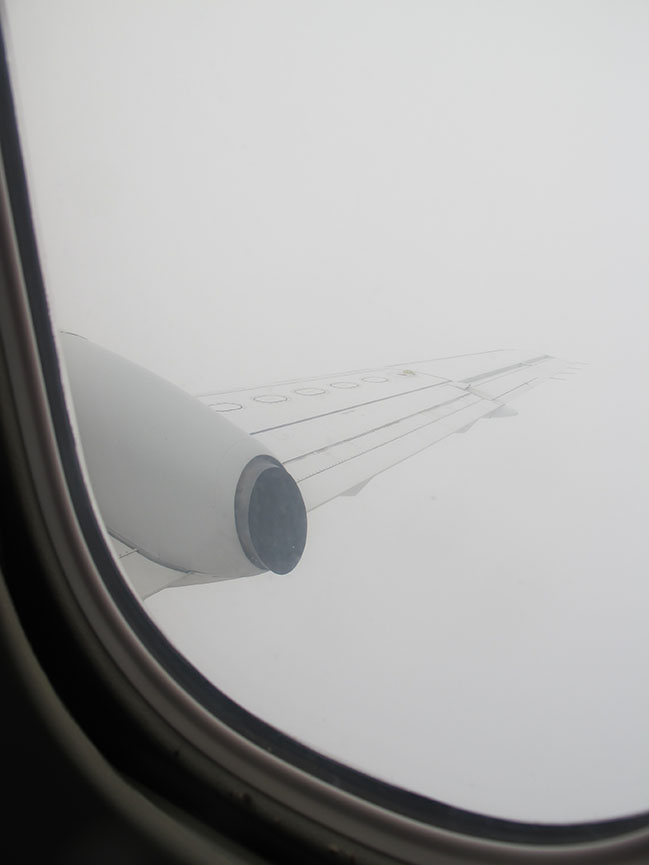
Seabird Camp on St. George had an unplanned start. The plane carrying Ann and Peter circled the island a few times, but it was too foggy to [...]
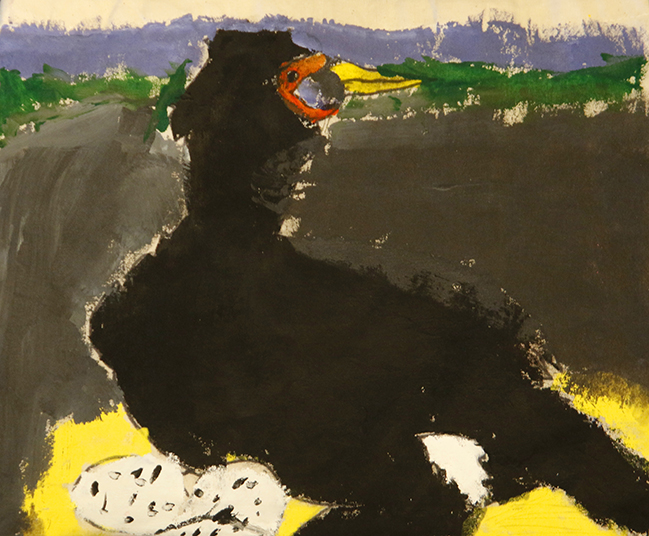
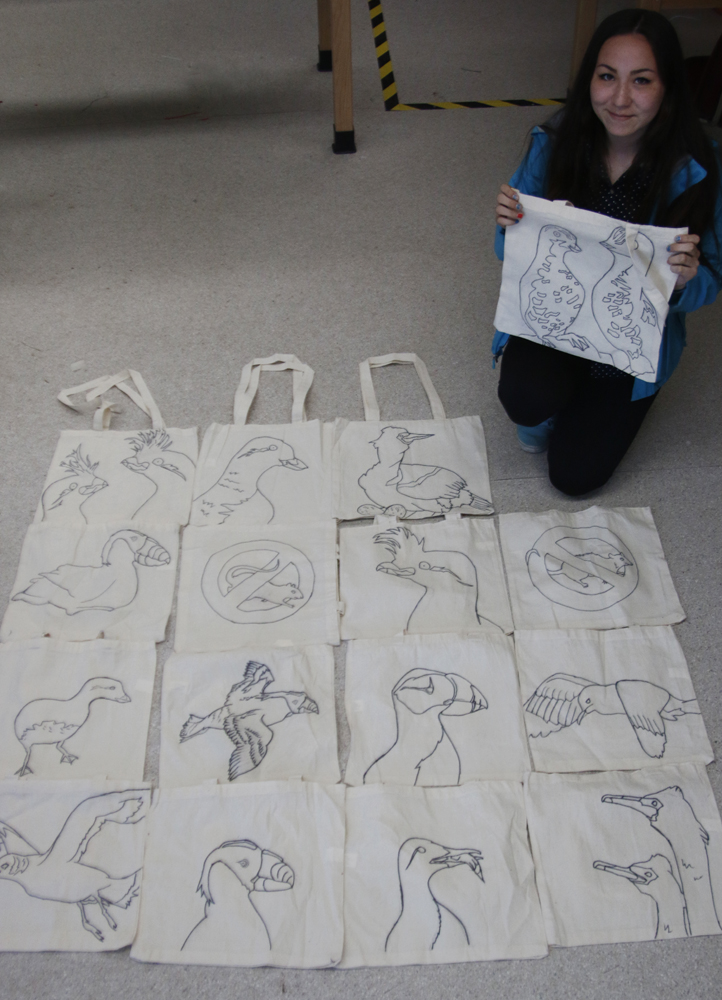
Kids participating in the recent Seabird Camp on St. Paul Island have created some beautiful portraits of the local seabirds to share with the students on the [...]

Where are the Commander Islands? The Commander Islands are located at the end of the Aleutian Islands, and about 110 miles east of the Kamchatka Peninsula. Funded [...]
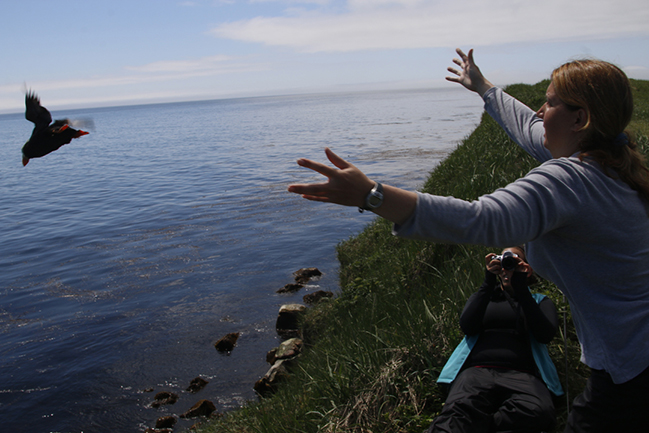
The wrap-up for this year's camp started with finding a place for all of our big animal masks. We can thank Mr. Mac at the St. Paul [...]
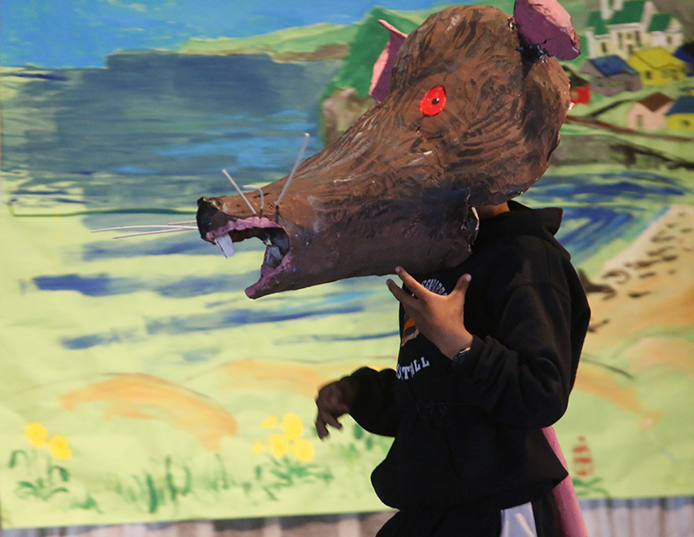
The day of the plays! Even with the extensive prep work we had done, everything came down to the wire Saturday. Masks, props and the background mural [...]
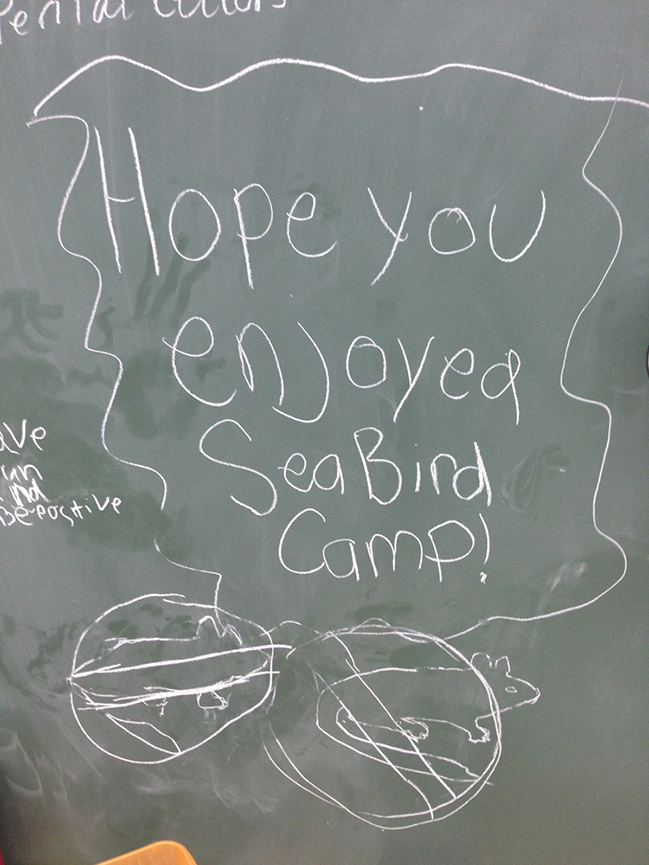
The last day of this year’s seabird camp! Our plays and goodbyes will happen tomorrow at 7:30 at the Rec Hall. We started the day by hearing [...]
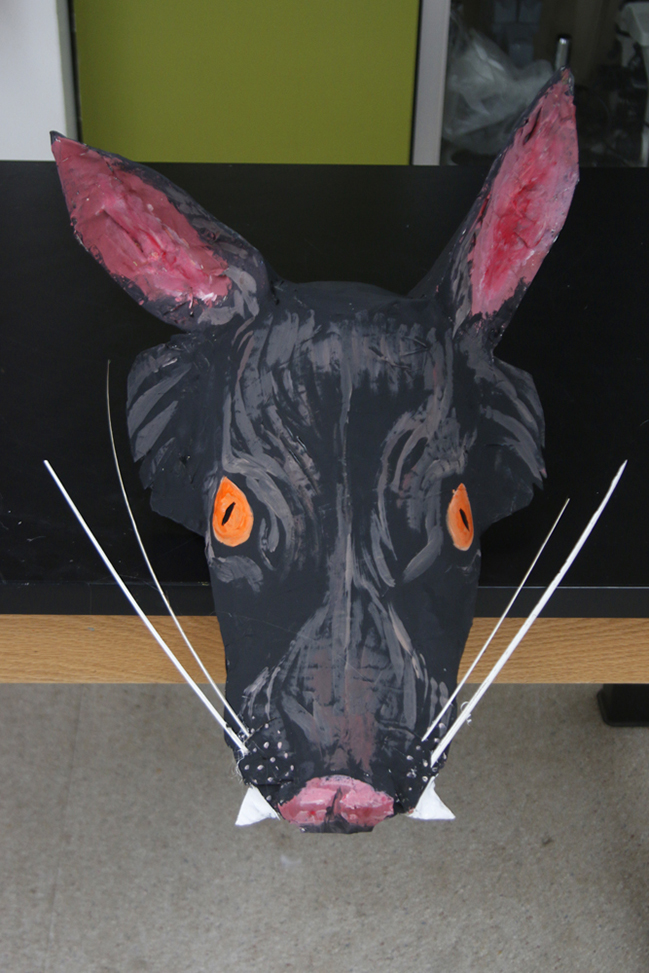
We started another big day at Seabird Camp with a presentation on “Seabird Capture: How and Why. “ Some of the students, including Chauncey and Ethan, were [...]
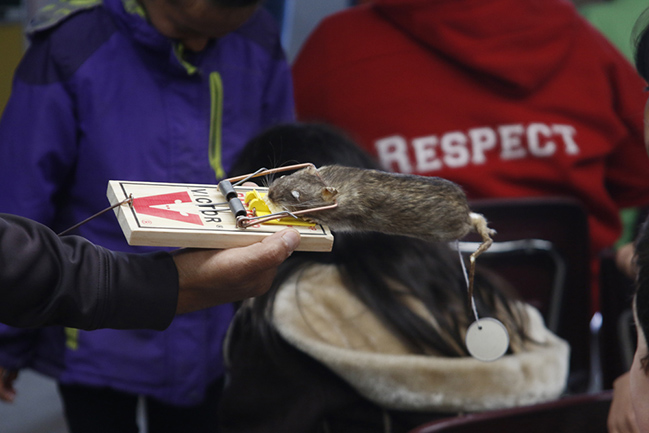
Day three of Seabird Camp started in the microscopic world as we looked at slides of zooplankton. Some kids had studied plankton the night before and found [...]
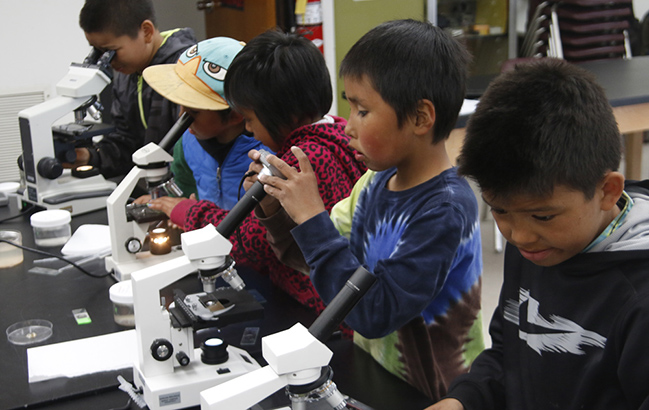
Thirty three kids packed the science room as Kendra started the day by talking about the U.S. Fish and Wildlife Service and what it does on the [...]
Seabird camp on St. Paul started with a bang! Teams of campers raced to collect all of the things that seabirds need to raise a chick. The [...]
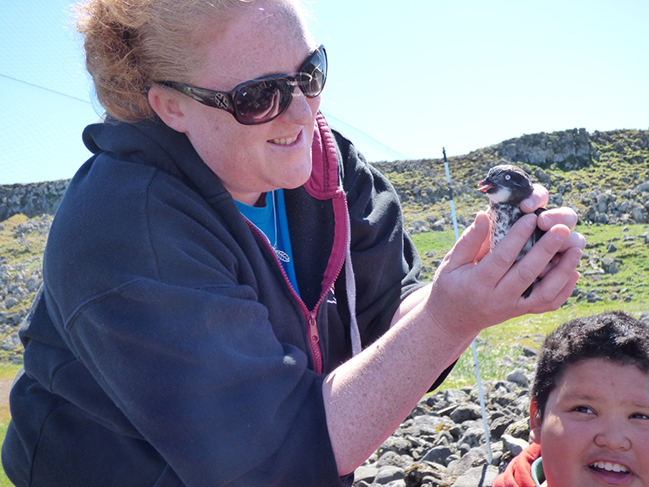
Veronica Padula and Misty Libby from the University of Alaska, Anchorage (UAA) are on St. Paul this summer studying contaminants in birds. Chauncey (one of our Seabird [...]
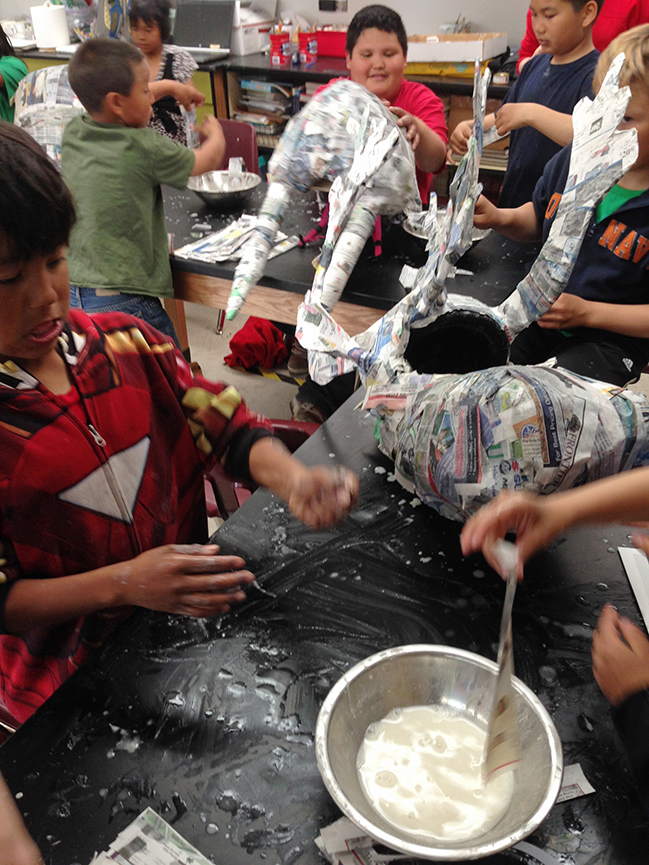
Count Down: Only two days until the start of Seabird Camp! Preparations have been rolling along here on St. Paul. We continued to build paper mache masks [...]
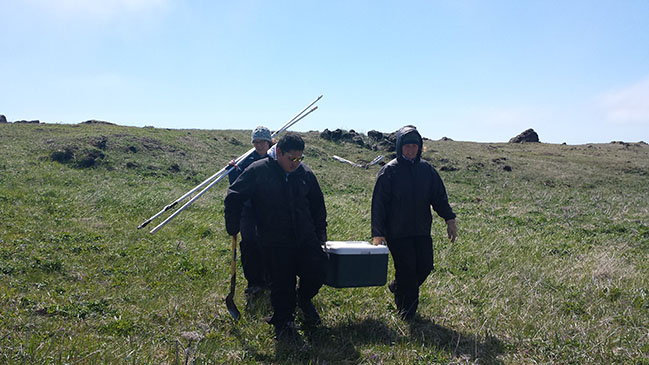
St. Paul Seabird Camp starts next week, and students and leaders are busy preparing. The two interns have started work, and Ram and students have been busy [...]

I had a great time talking with you all via Skype in April. Thanks for all your awesome questions, and to Ms. Kushin and Mr. Fay for [...]
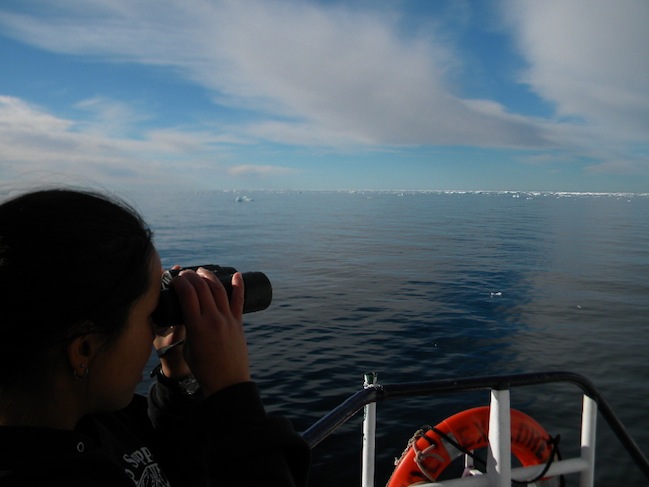
Catherine looking for seabirds near the ice, photo by Alex Andrews Why study seabirds at sea? Catherine Pham is a student at Hawai’i Pacific University. She [...]
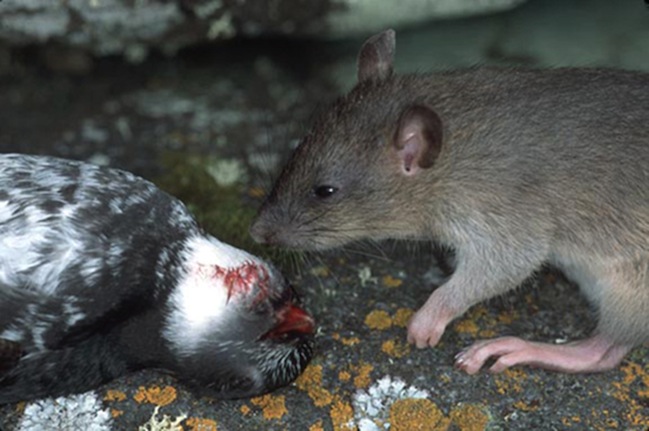
Least Auklet and Rat (above) © Ian Jones What is an invasive species? An introduced species, also called an alien or exotic species, is any species [...]
We hear that Miss. Kushin’s class is learning about migration this week: butterflies; mammals, birds… Don’t forget about Seabirds! Seabirds return to land to build nests, lay [...]
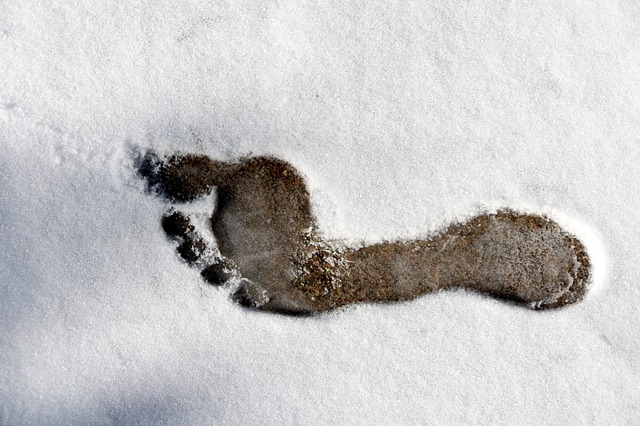
Miron, a student on St. Paul Island, asks, “Why don’t kittiwakes get frostbite on their feet if their legs and feet are in the cold water all [...]
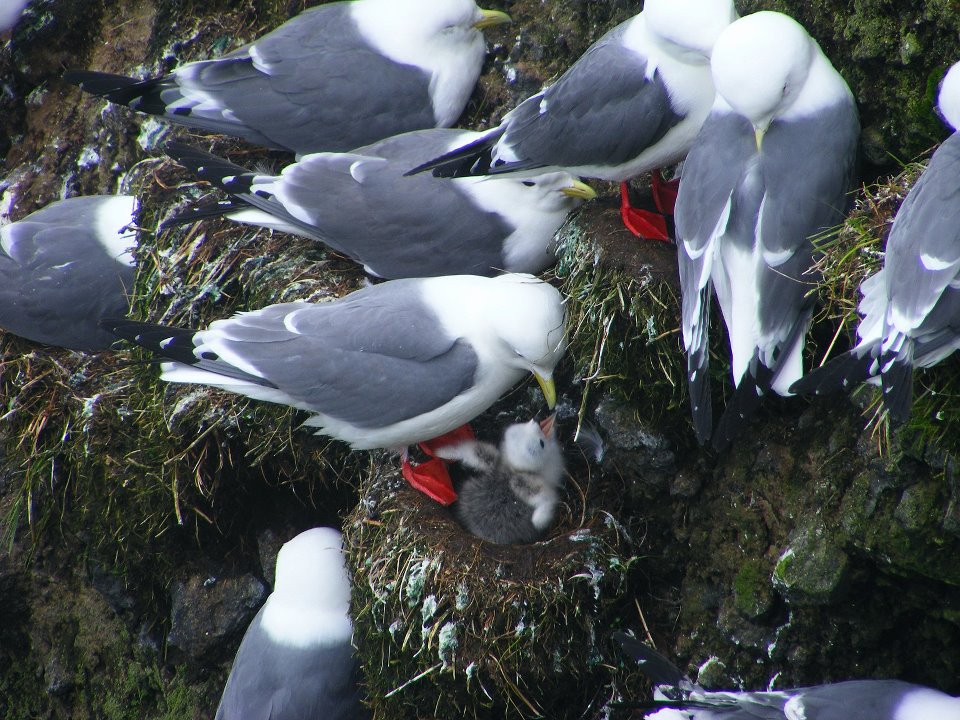
Red-legged kittiwake photo (above) by Caitlin Kroeger There are two species of kittiwake, the black-legged kittiwake (Rissa tridactyla) and the red-legged kittiwake (Rissa brevirostris). The red-legged kittiwake is [...]

Instead of working independently and alone, it is more and more common for a group of scientists to work together to figure out answers to a question [...]
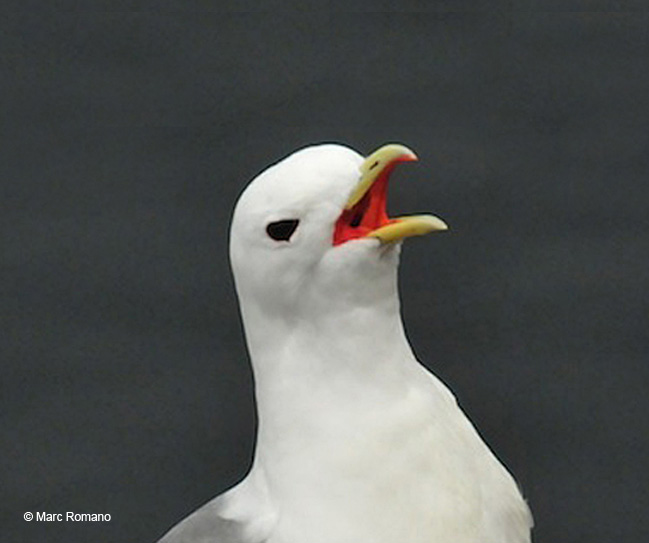
The Pribilof Islands are an important site for many seabird species, including 70% of the world’s red-legged kittiwake population. The Refuge’s annual seabird monitoring program provides essential information [...]
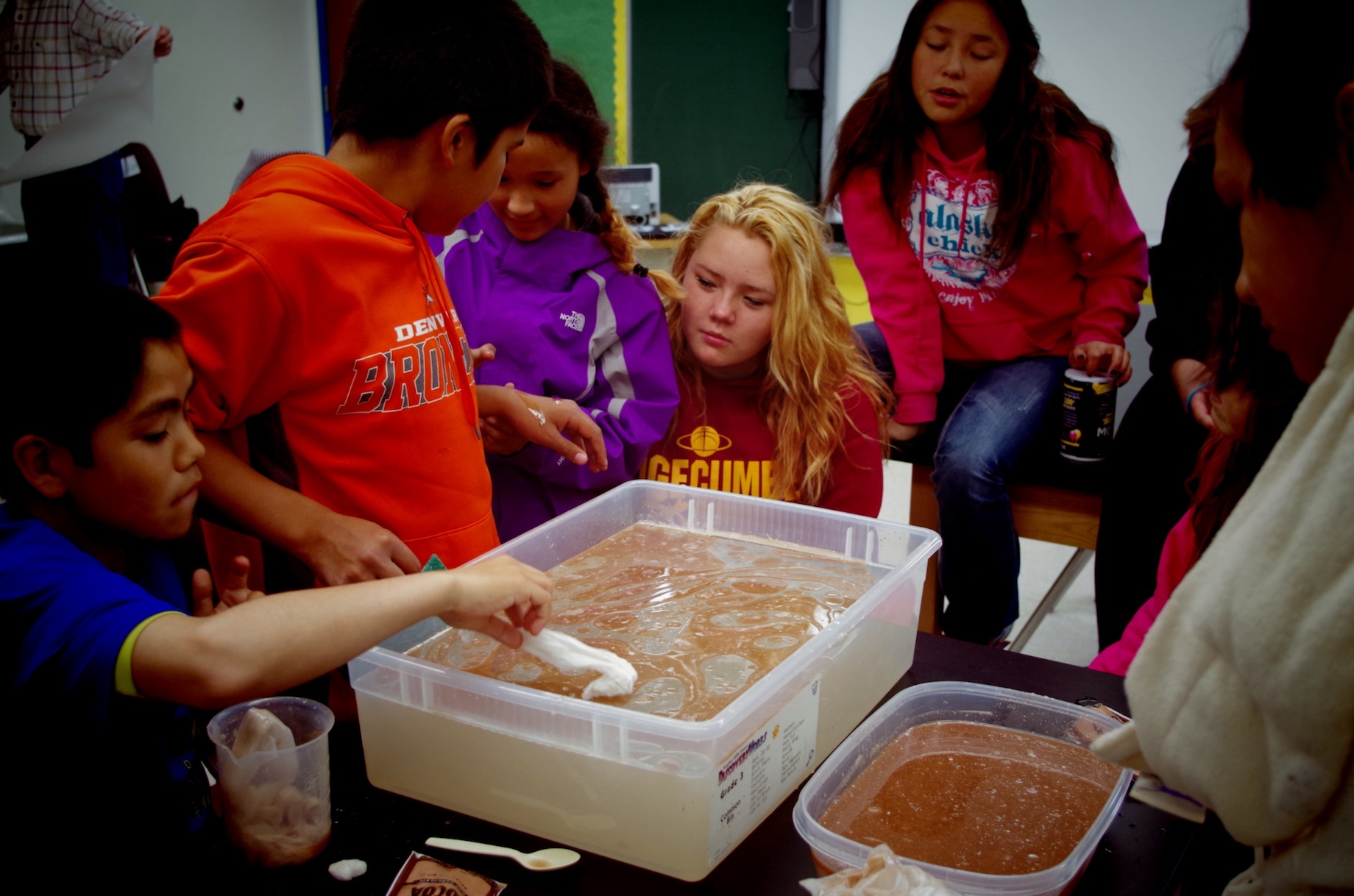
Veronica Padula (University of Alaska, Anchorage) recently traveled to St. Paul to teach students about seabirds and marine pollution during Bering Sea Days (above photo shows students learning [...]
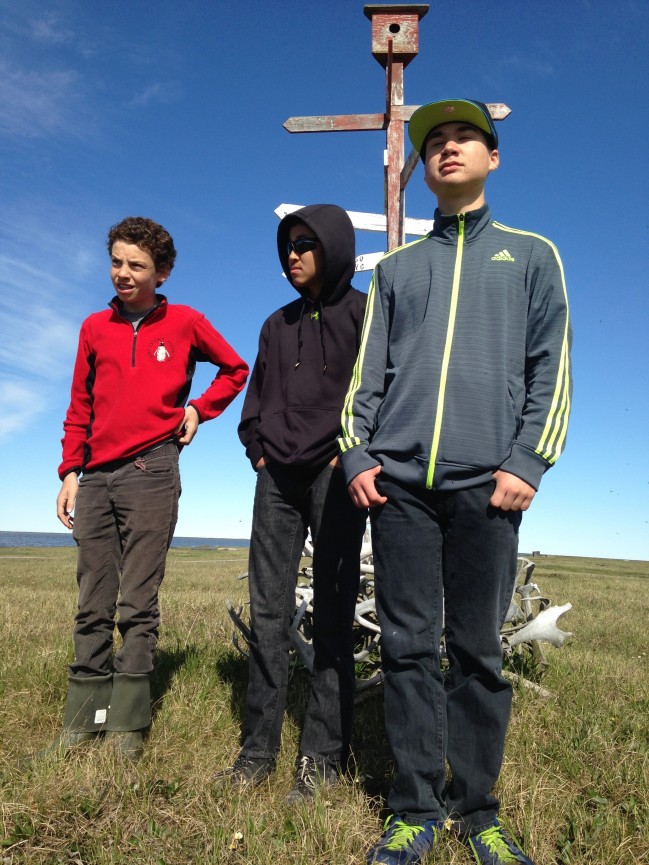
The Colville River Teen Video Crew (left to right): Sam Bernitz (Anchorage), Sam Tocktoo (Shishmaref), and Andrew Kennedy (Fairbanks). The trio wrapped up filming yellow-billed loons last week [...]
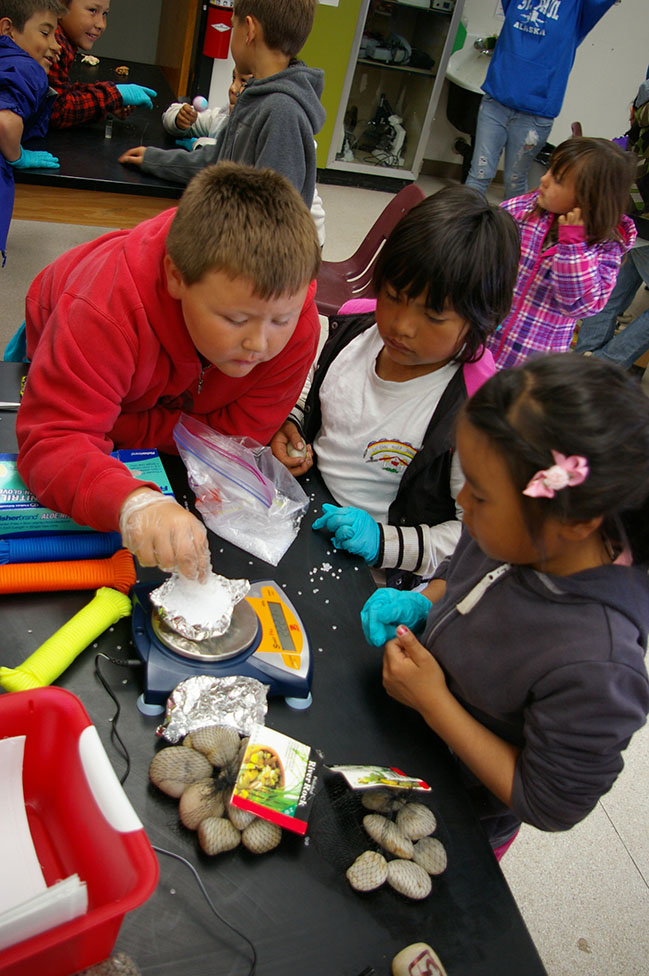
Students attending Seabird Camp set-up a plastic pellet experiment. Trevor Haynes explains more… University of Alaska Scientist Veronica Padula had a challenge for the seabird camp students [...]
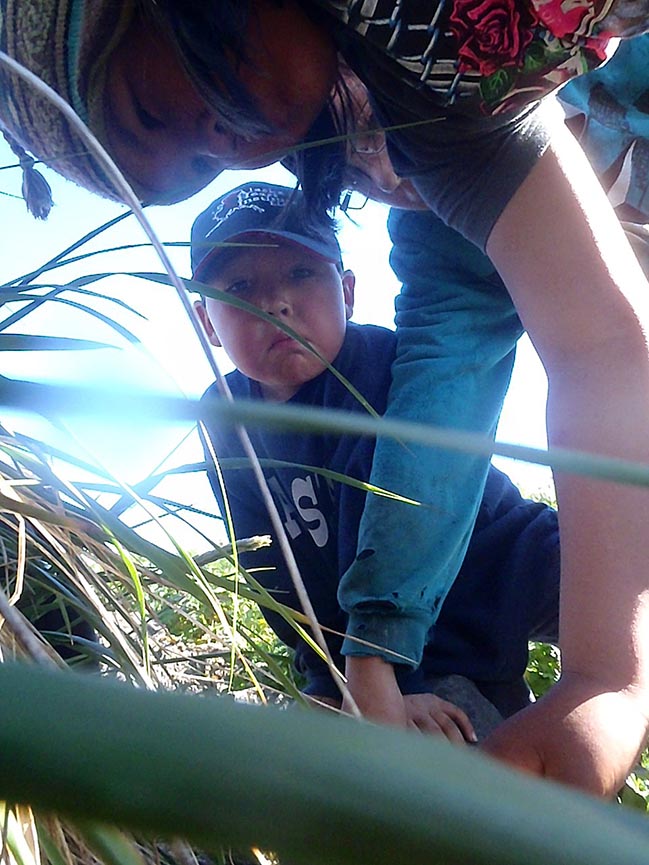
No Seabird Camp on St. George this year, but the kids have still been busy. The least auklet nest boxes that were made and installed during camp [...]
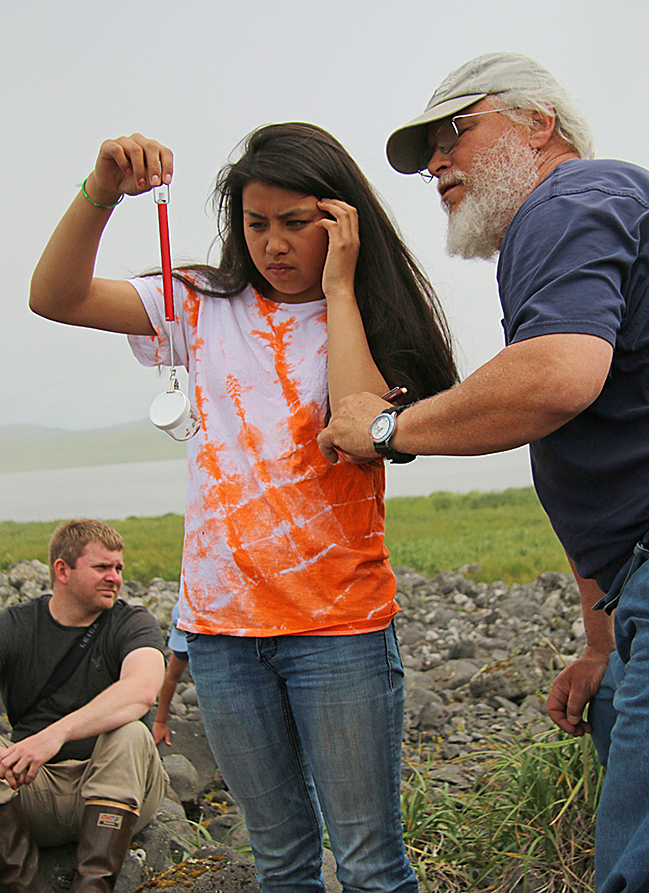
Work on St. Paul continued for a few days after Seabird Camp. Our intern, Diamond, joined USFWS crew to capture Least Auklets and collect the food they [...]
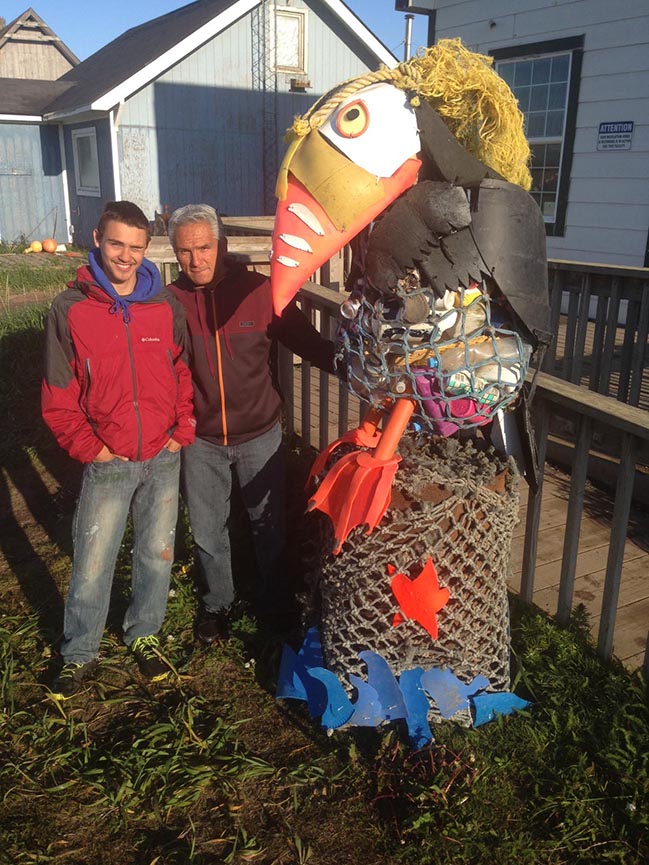
Garbie was safely installed in her new home in the lobby of the Tribal Office. Here she is getting her photo taken with Paul and Dallas from [...]
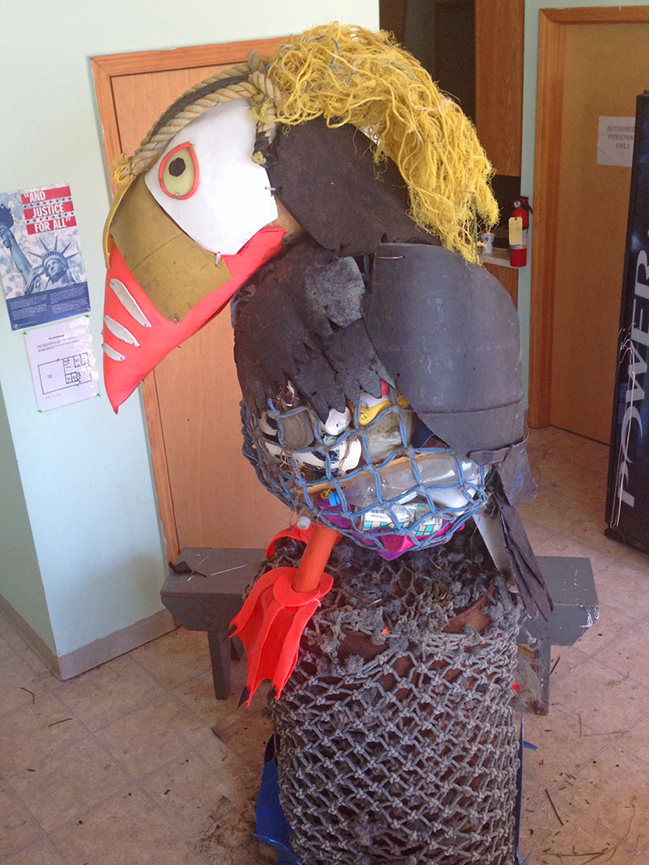
Garbie the trash bird was completed today and is looking for a (large) burrow to call home. She already has many friends! Here she is posing with [...]
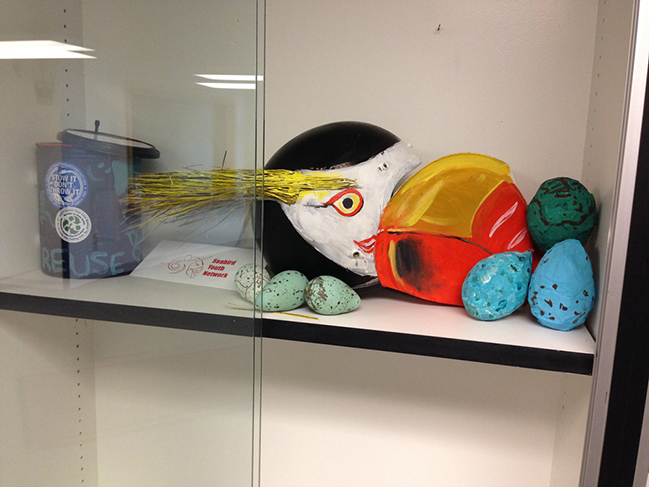
Camp is officially over, but work continues on t-shirts and finishing the fishing line recycling containers (made from recycled Folger coffee cans).
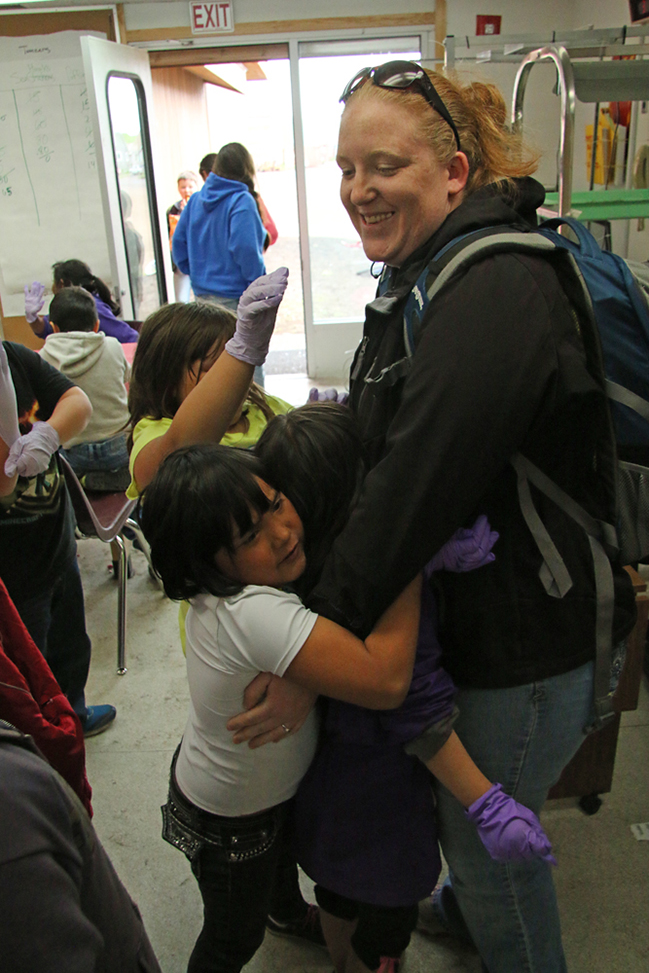
The final official day of Seabird Camp 2014. We started the day with a conference call with Sean Russell of the “Stow-It-Don’t –Throw-It” project. It was good [...]
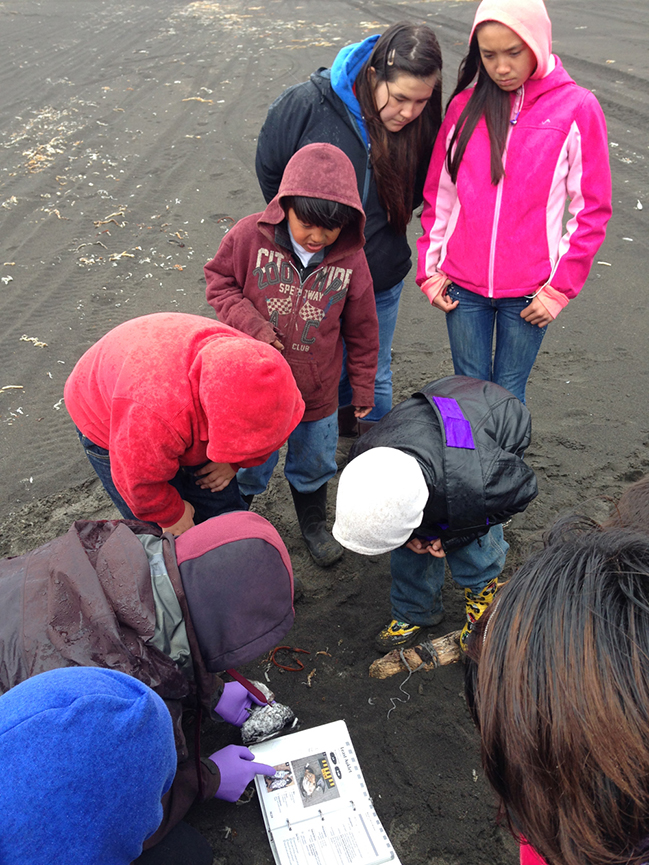
Another busy day at Seabird Camp! The campers finished painting their bright blue or green murre eggs to start camp today. We will use them for games [...]
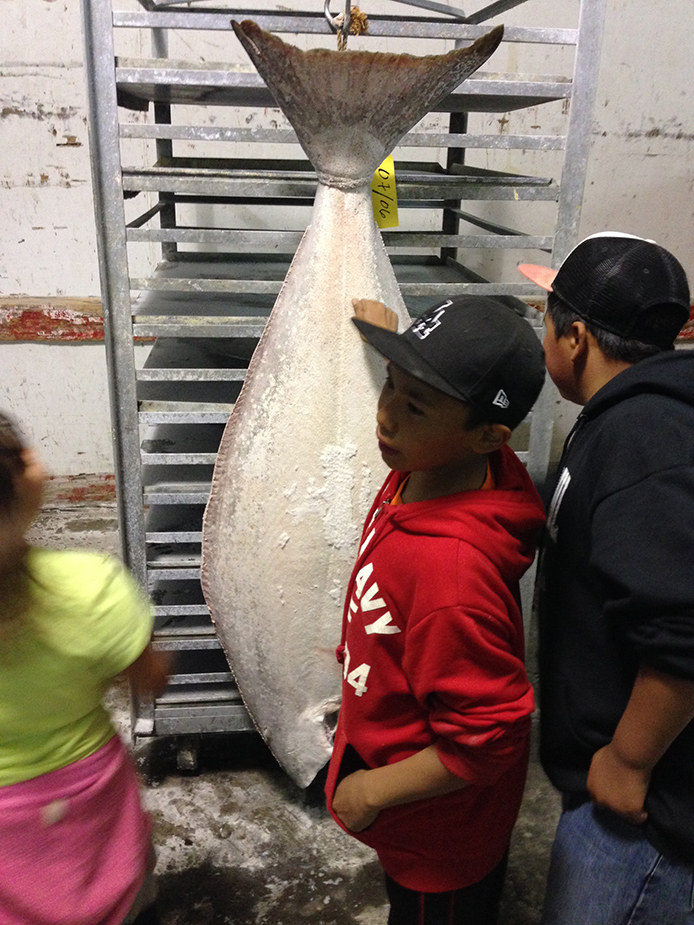
Here is a blog entry written by our student intern, Diamond, about her trip to the cliffs with Refuge biologists and the third day of Seabird Camp. [...]
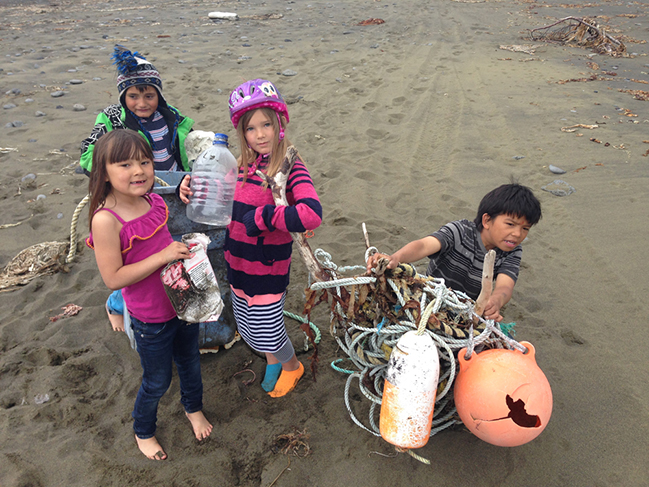
After doing some research, Campers were surprised to find out how long waste items take to biodegrade. We took in the “Stow-It-Don’t-Throw-It” program’s presentation on marine debris, [...]
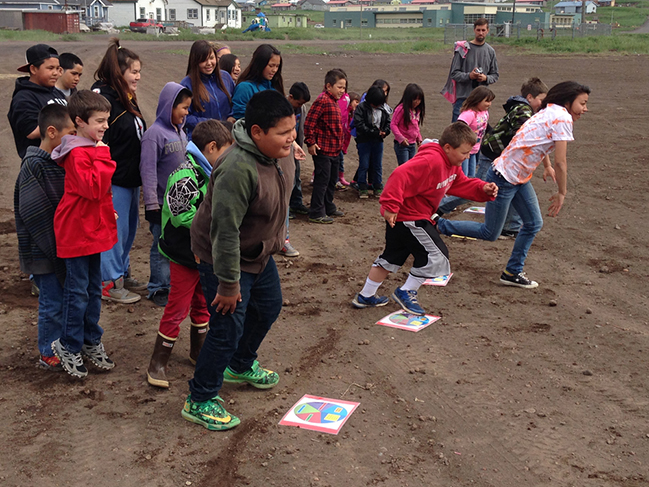
We had a very busy, active and messy first day in Seabird Camp! During “Bird Beak Buffet” students learned which “beaks” work best for which food items. [...]
Trevor Haynes put together this fun movie about the 4th July celebrations, with some great footage of the Seabird Float in action!
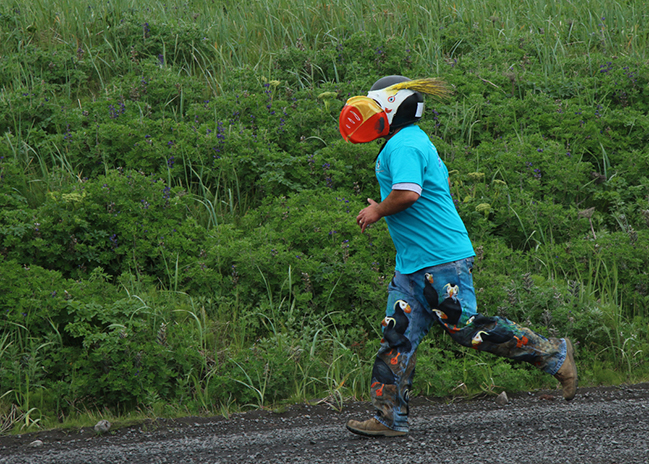
The St. Paul Mini-Marathon is an annual event put on by the City of St. Paul as part of the 4th of July celebration. It starts at [...]
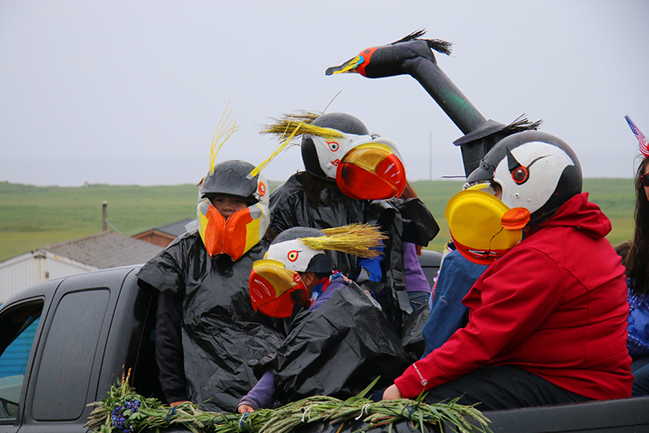
Wow, what a 4th of July! (Or June-July as they say here.) We started with a (rather wet) parade, and continued with games on the ball-field. Both [...]
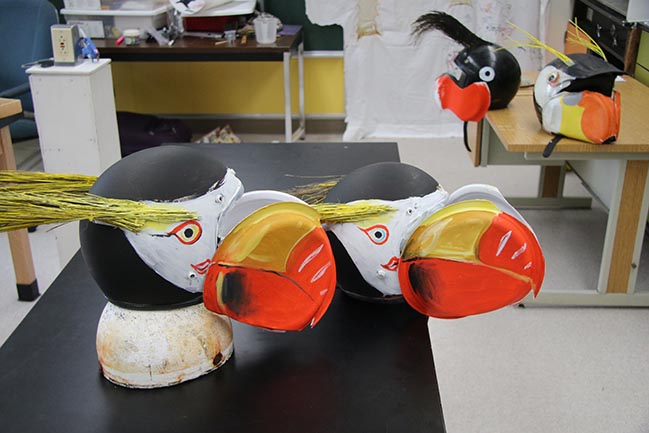
The Camp Team has been busy making super cool seabird masks for the 4th July parade! I wouldn't want to mess with these puffins!
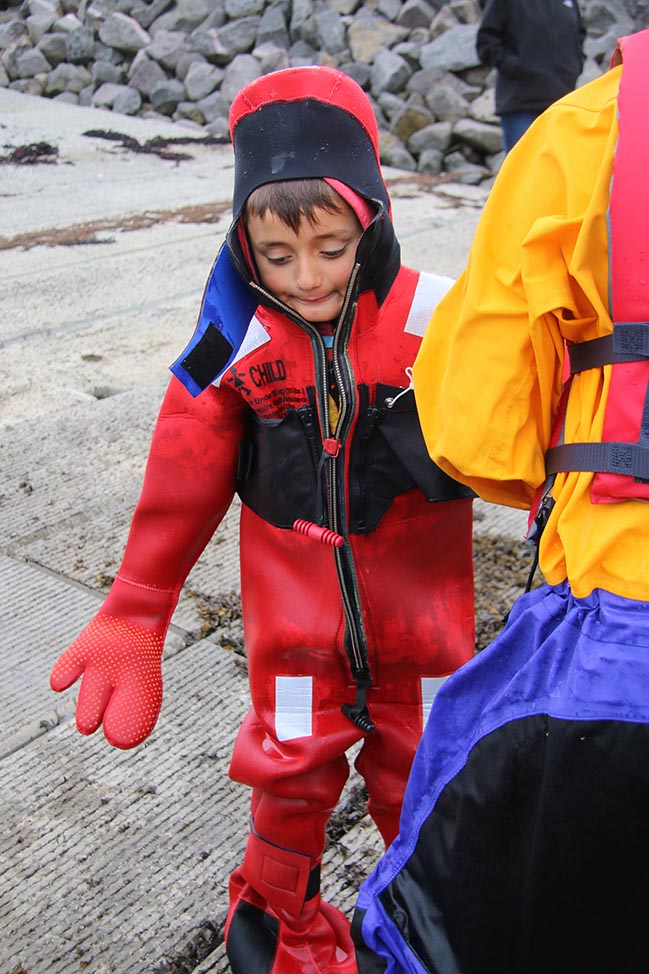
Ram and Trevor have made safely to St. Paul, and everyone is busy preparing for Seabird Camp. On their first day, they attended a "Kids Don't Float" [...]
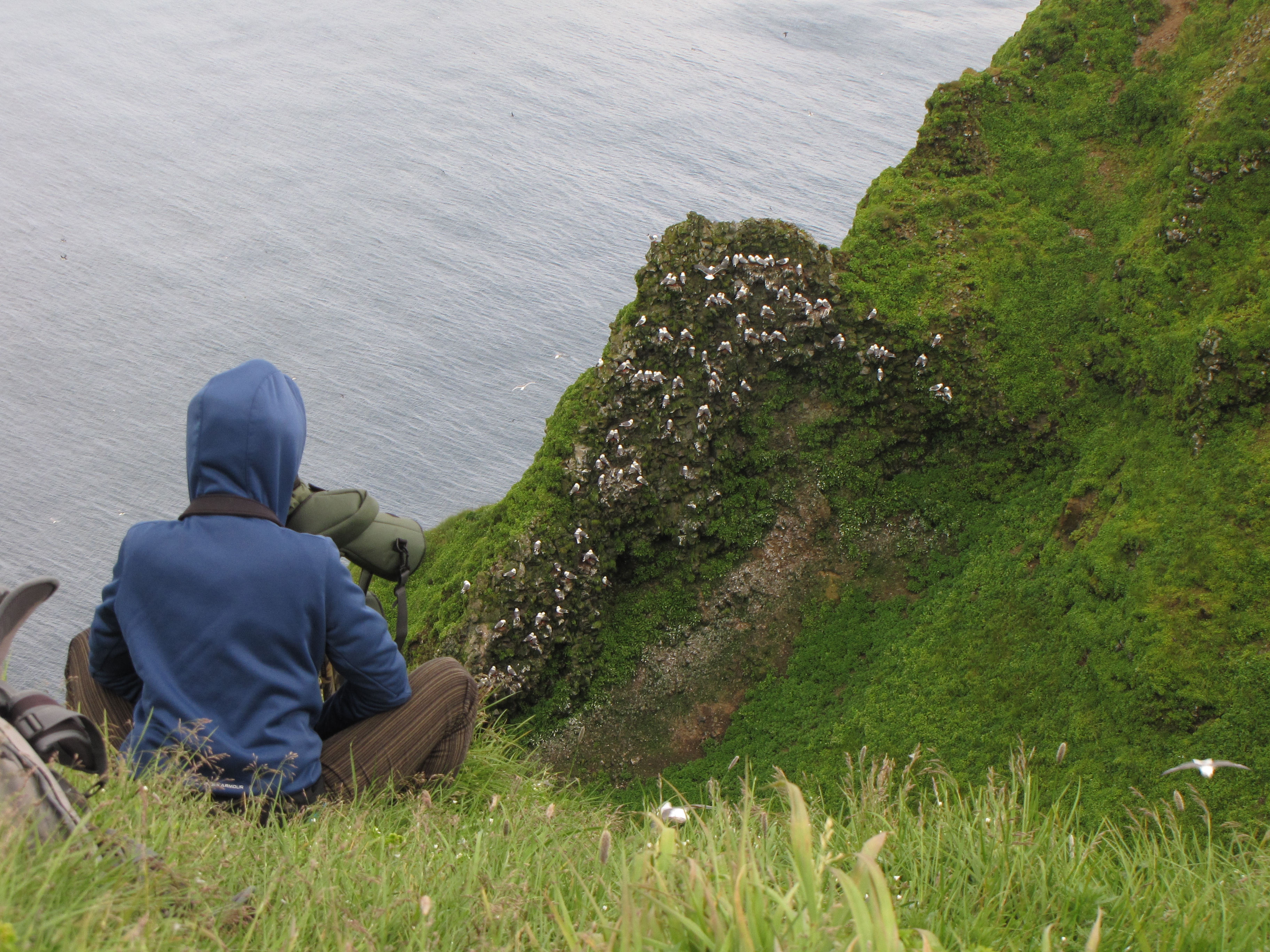
It’s a POPULATION COUNT YEAR on the Pribilof Islands. What is a “Population Count Year”? The Alaska Maritime National Wildlife Refuge (AMNWR) counts the number of seabirds [...]
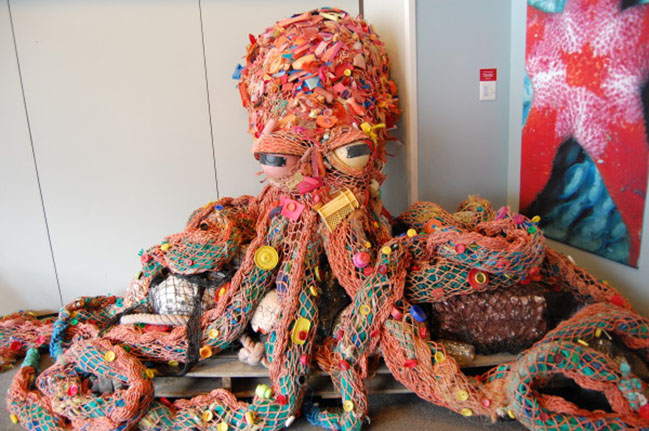
“Ophelia” octopus created out of marine debris by Kodiak High School students. One of the main focuses for the 2014 summer Seabird Camp on St. Paul Island is [...]