
Seabirds worldwide face a number of threats including pollution, invasive species, habitat loss and competition with fisheries. Fisheries bycatch (incidental catch) is also a threat to many seabird populations.
Seabird Bycatch in long-line fisheries: Surface feeding seabirds (such as albatross, fulmars and gulls) are at risk of getting caught on the fishing hooks between the time the hooks leave the fishing boat and the time they sink below the diving depth of the foraging seabird. Prevention methods either focus on deterring birds from making contact with cables or reducing the attractiveness of the fishing boat by managing the discharge of the offal differently.
Seabird Bycatch in Gillnet Fisheries: Gillnetting is another method of fishing (commonly used to catch salmon), and involves a wall of hard-to-see netting that hangs in the water column. Unlike trawl and long-line fisheries that tend to catch more surface feeding seabird species, gillnets trap diving seabirds, such as murres, puffins and murrelets. These diving birds get tangled in the netting and drown.
Puffins: Puffins catch their prey by “flying” under water. These amazing birds can dive up to 100 meters deep. Puffins are notoriously hard to count, and very little is known about Tufted and Horned Puffin population trends in the Gulf of Alaska, despite the fact that Tufted Puffin populations in the California Current region (that includes Washington, Oregon, and California) have declined dramatically—estimated over 90%—and they have been petitioned for listing as endangered species in the United States.
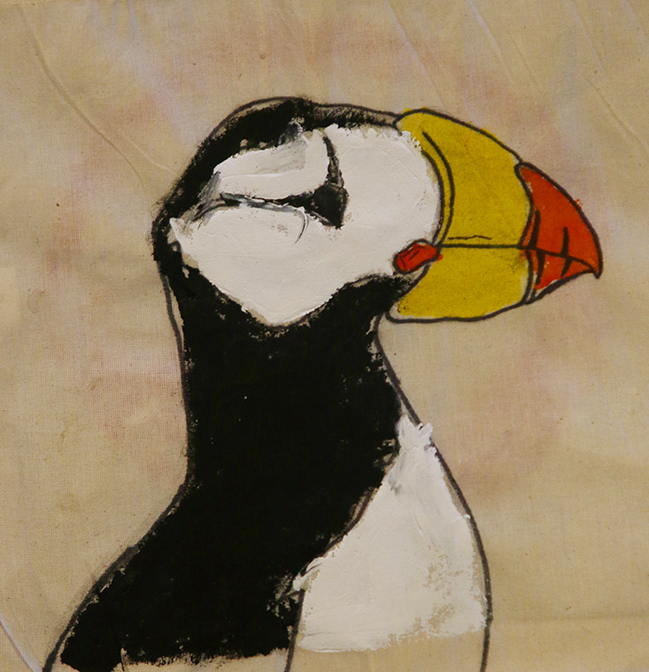
Horned Puffin Art, St. Paul Island
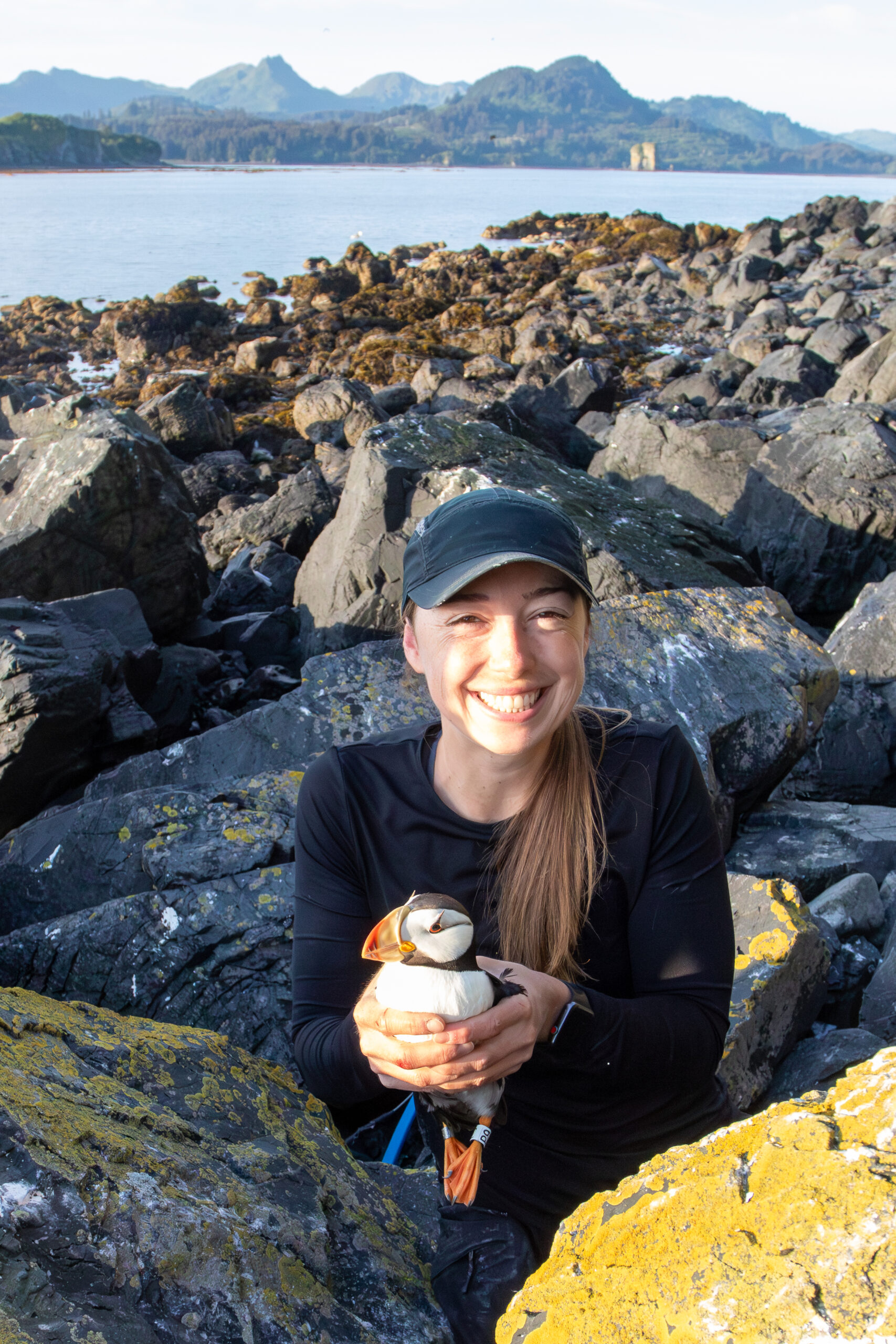
Katie Stoner—a PhD student at Oregon State University—has been studying Tufted and Horned Puffins breeding on Kodiak Island (Alaska), hoping to understand more about the conservation risks for these two species.
Gillnets are used on Kodiak for both subsistence and commercial salmon fishing, but little is known about the risk of these nets for locally breeding puffins. Observers monitored how many puffins were accidentally caught in commercial gillnets in 2002 and 2005, but we don’t know what these estimates might mean for puffin populations in Kodiak.
Katie estimated how puffin bycatch in gillnets over 50 years could impact the size of puffin populations in the Kodiak Archipelago, and determined that the current rates of mortality are likely contributing to declines of local populations of puffins. In fact, given the observed rates of bycatch of puffins, Katie concluded that there is over a 30% chance that puffins in Kodiak will become extinct by 2055.
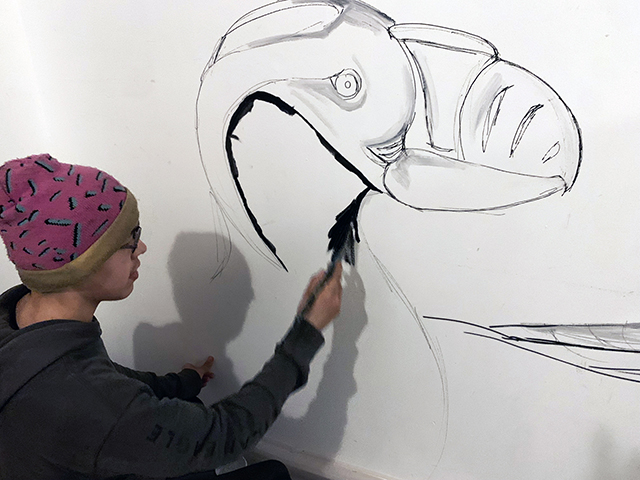
Tufted Puffin Art, St. George Island
This study highlights the need for more understanding of the conservation threats for Alaska seabird populations, and suggests more information is needed from both fishery surveillance and the monitoring of puffin vital statistics, including adult survival, chick production and population trends.
It is also essential that we continue to work on recommendations to fisheries that reduce incidental bycatch of seabirds. For gill-netters, this could include: setting nets further away from seabird colonies, soaking nets for shorter periods, or using techniques to make nets more visible to seabirds such as adding colored lights.