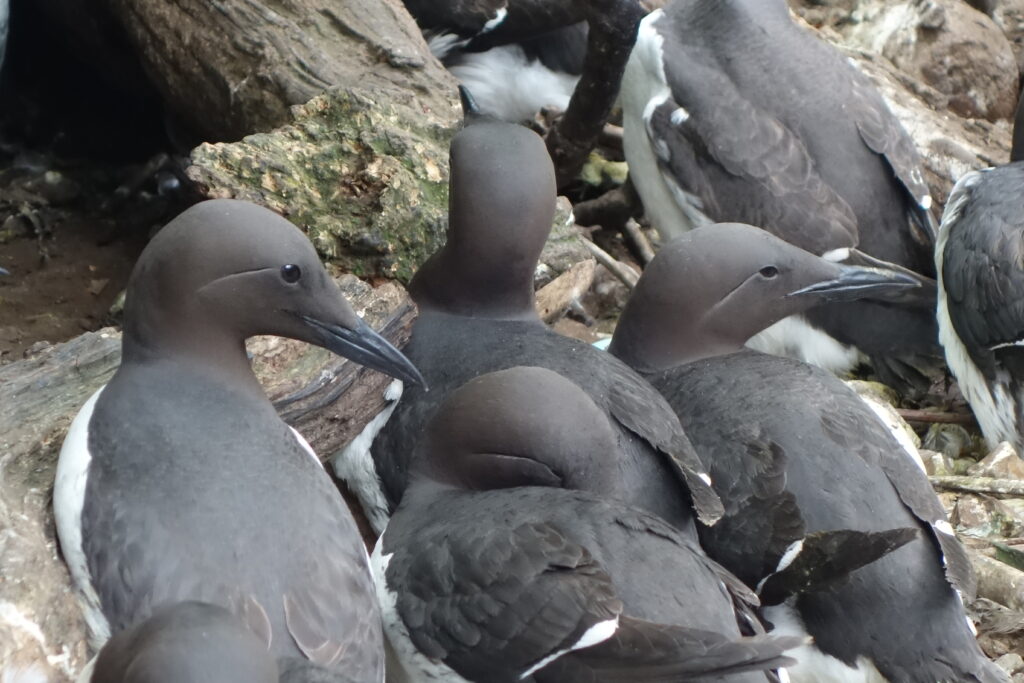
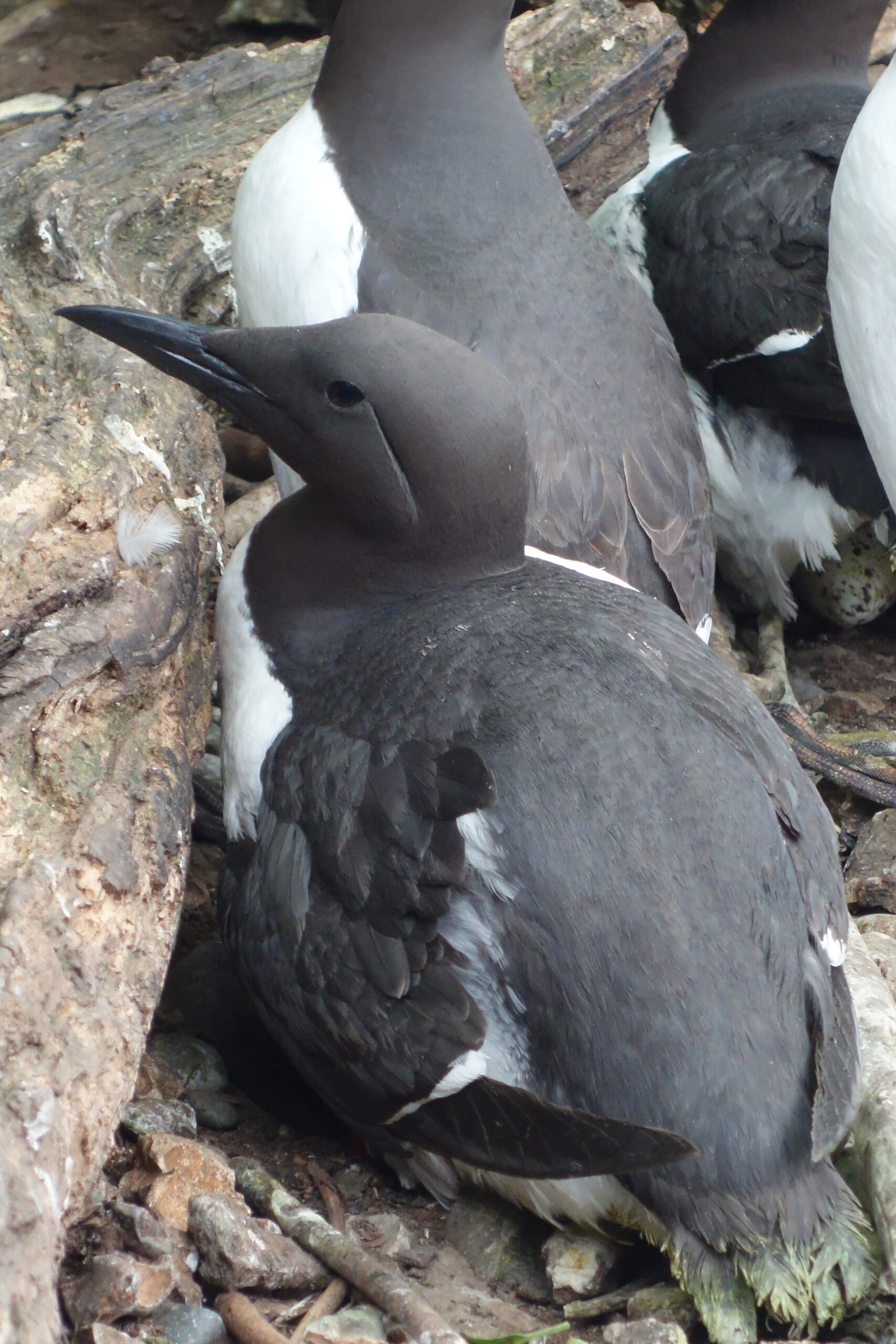
It’s already mid-April, the Alaska summer is approaching fast, and seabirds will be showing back up at their breeding colonies before we know it.
We’re already getting ready for field work plans for this coming summer’s work on Duck and Chisik Island; figuring out transport out to the West side of Cook Inlet and fine-tuning our game plan for collecting data on the murres and puffins.
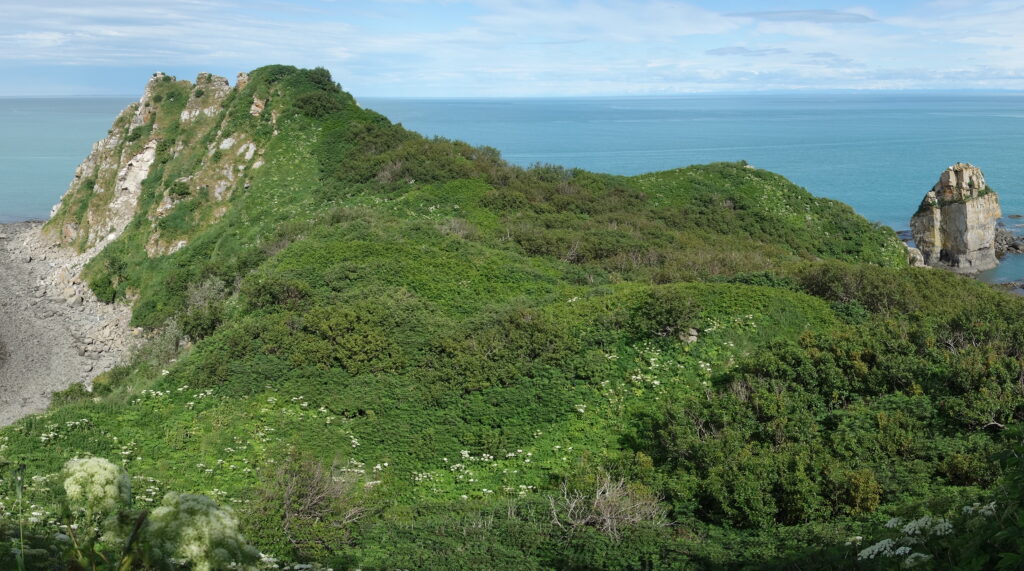
Overlooking Duck Island
It’s good to look back on the 2025 season and to remember what we learned about the birds. The black-legged kittiwakes on Chisik Island were only nesting in the large colony near Snug Harbor cannery. All the other cliff areas where kittiwakes have bred in previous years were empty. The Snug Harbor kittiwakes had chicks, and there were many nests that were successfully rearing twins.
Murres on Chisik cliffs were also sparce, and the majority of successful murres are now confined to the colony breeding under the dense trees on Duck Island. Murres on Duck Island were being disturbed by bald eagle predation and they took a little longer this year to settle down on eggs.
The survival blind continued to work great, and it was a thrill to be able to sit and watch the birds so closely. I love being able to watch individual behaviors and see different personalities among the birds. Some birds are calm, some are feisty, some shout more than others, a few are very clumsy, and some stand out as super-sweet with their neighbors and partners. We saw the majority of our color banded birds, suggesting fairly high over-winter survival rates.
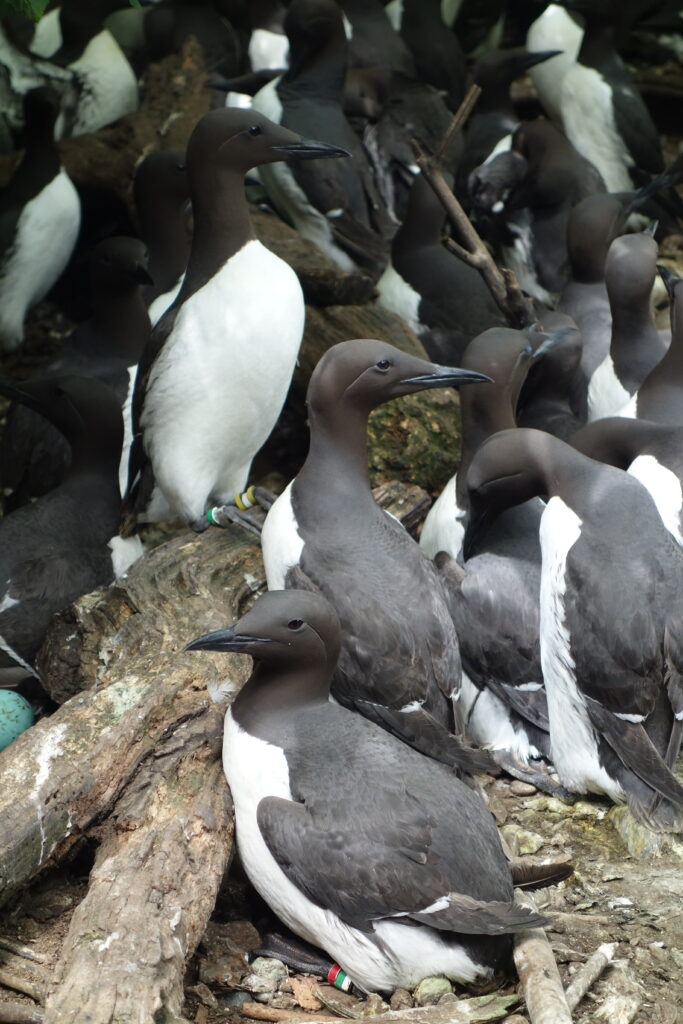
Color-banded mures in the survival plot. Can you see WGR (white over green over red)?
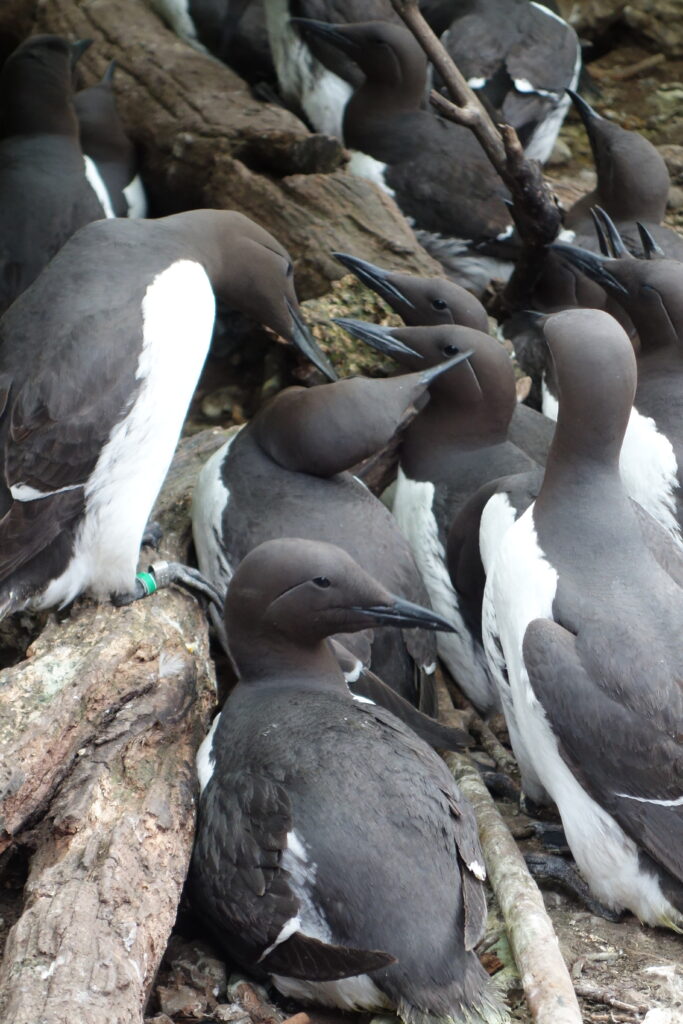
Murres preening each other under the trees on Duck Island
We were able to recatch 6 (out of 12) of the murres who are carrying geolocators to record over-winter movements and we’ll try to catch more this coming summer.
We are excited see how the kittiwakes and murres will do this summer, and how many of our banded murres we will see again from the blind.